
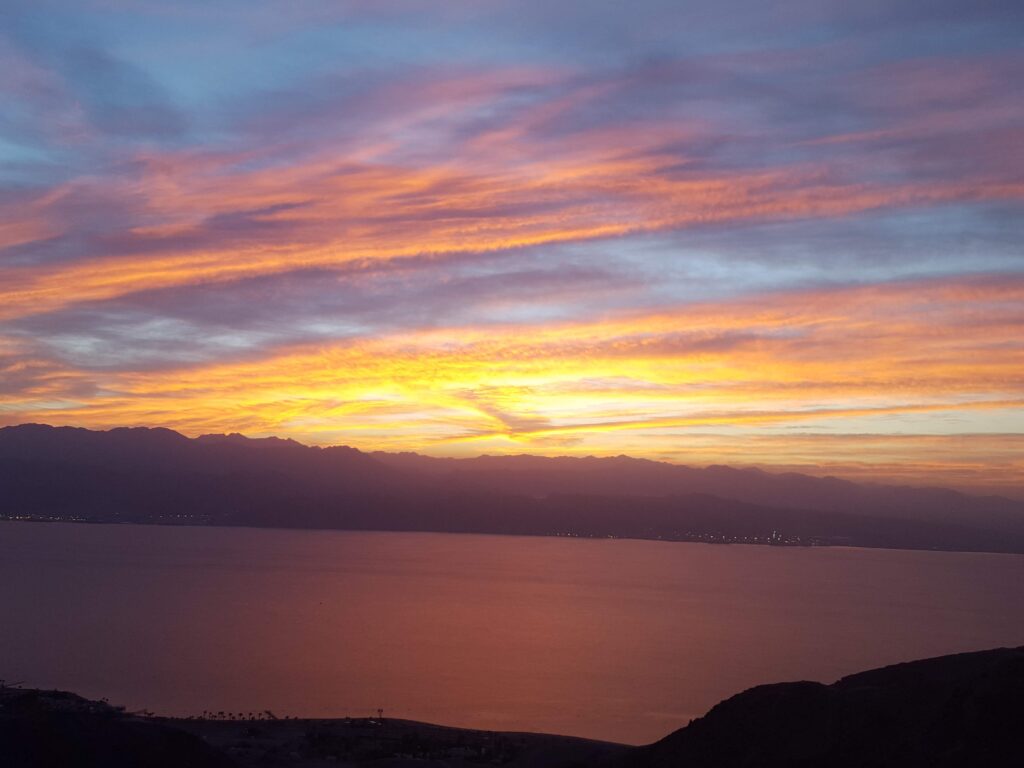
The Ultimate Eilat Desert Tour: Mount Tzfahot, Timna Park, and the Red Canyon
The desert surrounding Israel’s southernmost resort city, Eilat, is far more than just a backdrop of beautiful red and black mountains. It is a geological wonderland, a cradle of ancient human technology, and home to some of the most spectacular hiking trails in the Middle East.
As a licensed Israeli tour guide, I often tell my guests that to truly understand Eilat, you have to leave the beaches behind for at least a day. From the ancient metamorphic rocks of the Arabian-Nubian Shield to the world’s oldest copper mines, this region holds secrets that span hundreds of millions of years.
Below is an expert-designed, step-by-step itinerary for an unforgettable desert day tour from Eilat, along with extra recommendations to help you customize your Negev and Arava adventure.
Stop 1: Mount Tzfahot—A Sunrise Hike Across Four Countries
To experience the desert at its most magical, we begin our day in the pitch-black hours before dawn. Equipped with headlamps and sturdy hiking boots, we will make our way up Mount Tzfahot.
The Hike and the Geology
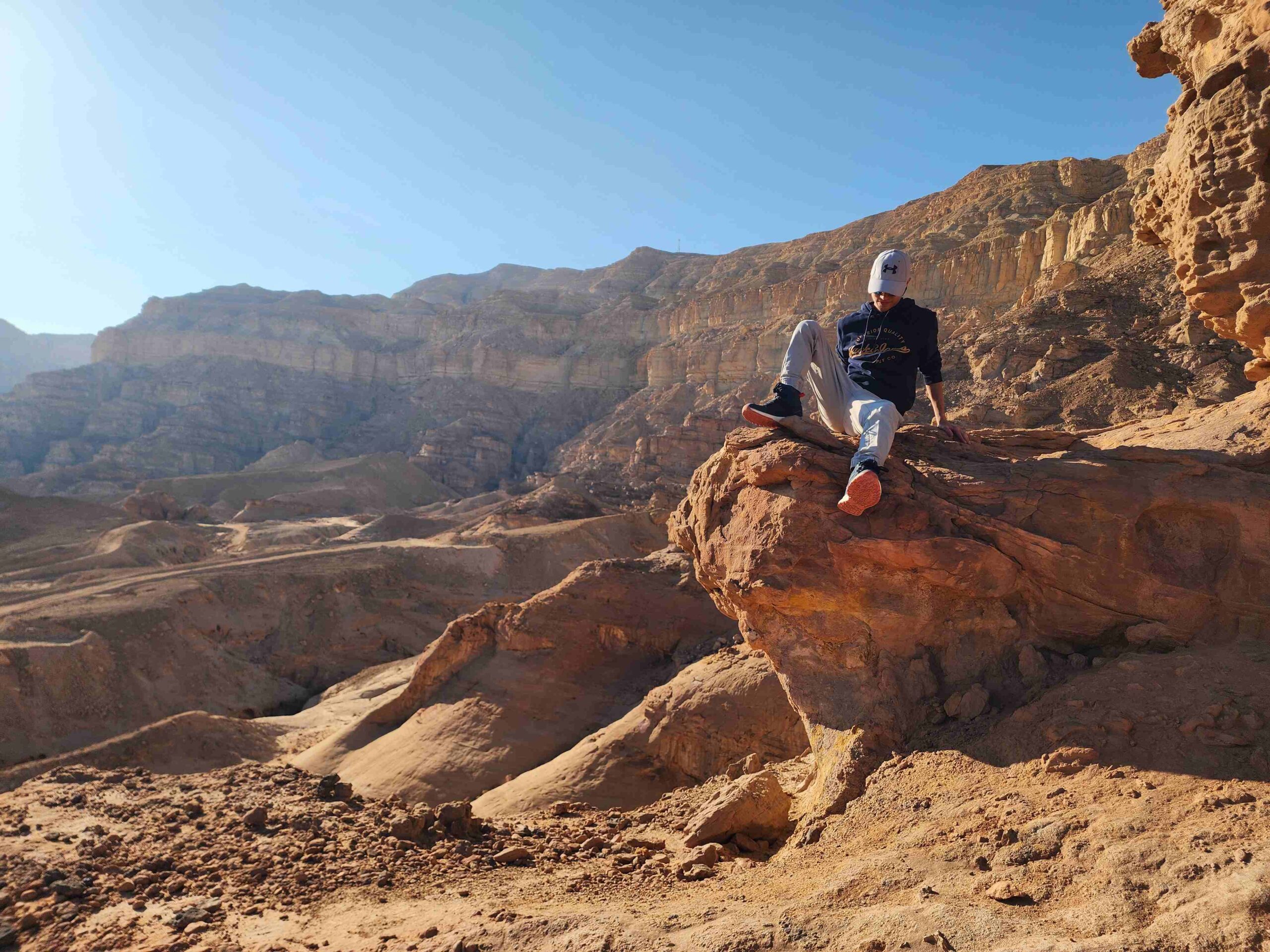
Mount Tzfahot is a geological marvel. Unlike nearby sandstone formations, the Eilat Mountains are made of ancient igneous and metamorphic basement rocks belonging to the Arabian-Nubian Shield. As we climb, the path is composed of dark granite, schist, and gneiss dating back 600 to 800 million years.
The Peak: A Four-Country Panorama
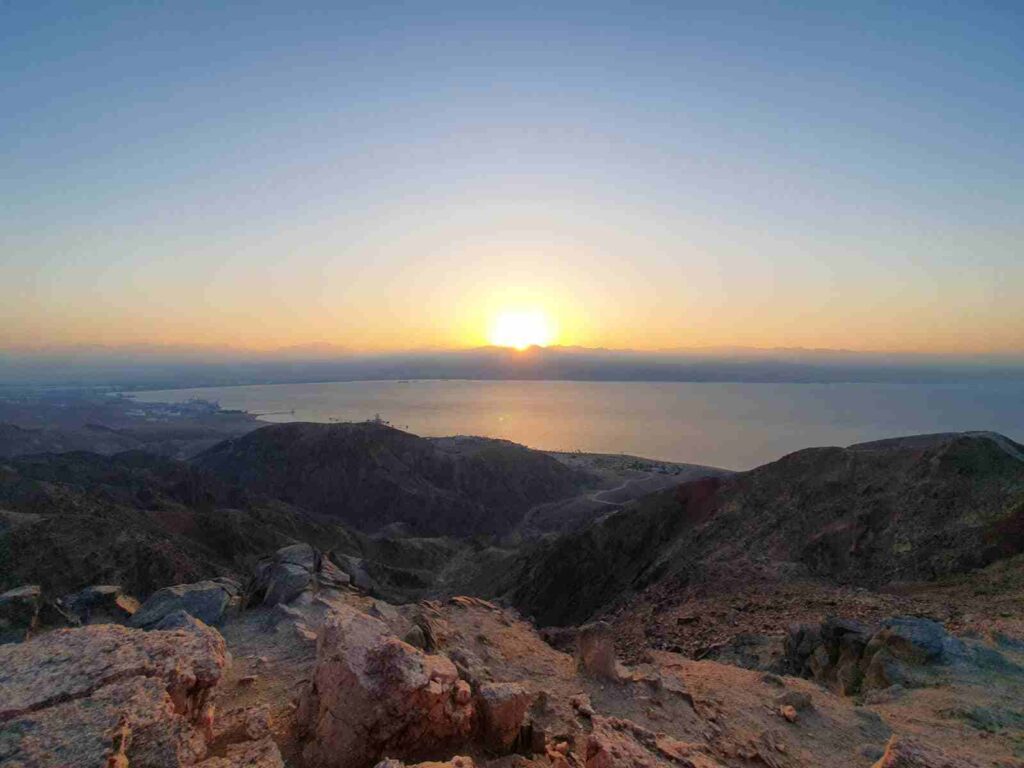
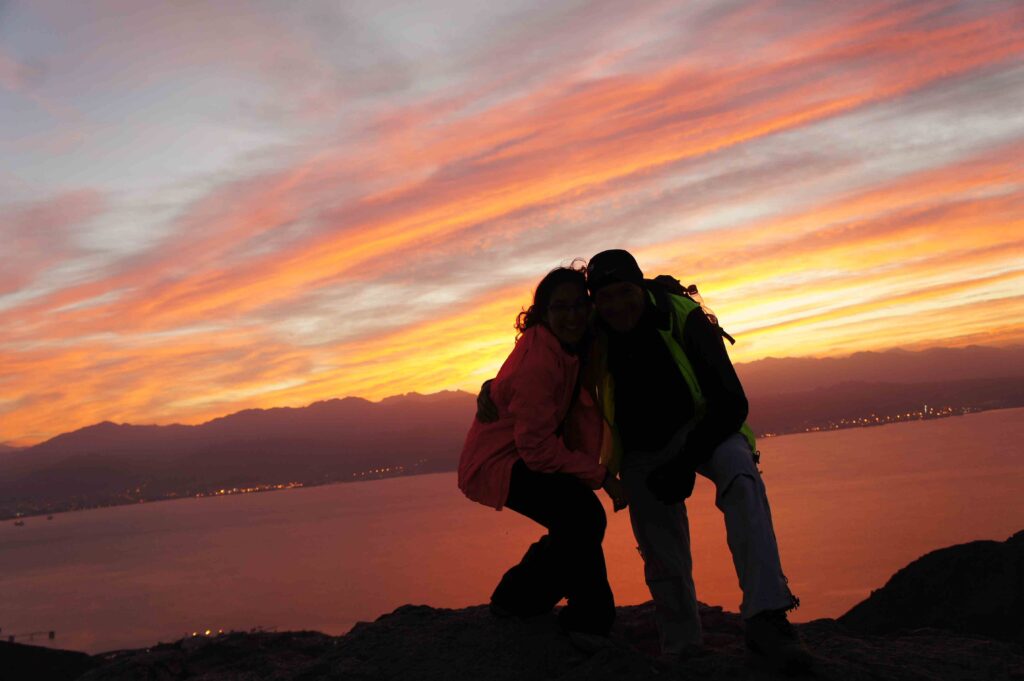
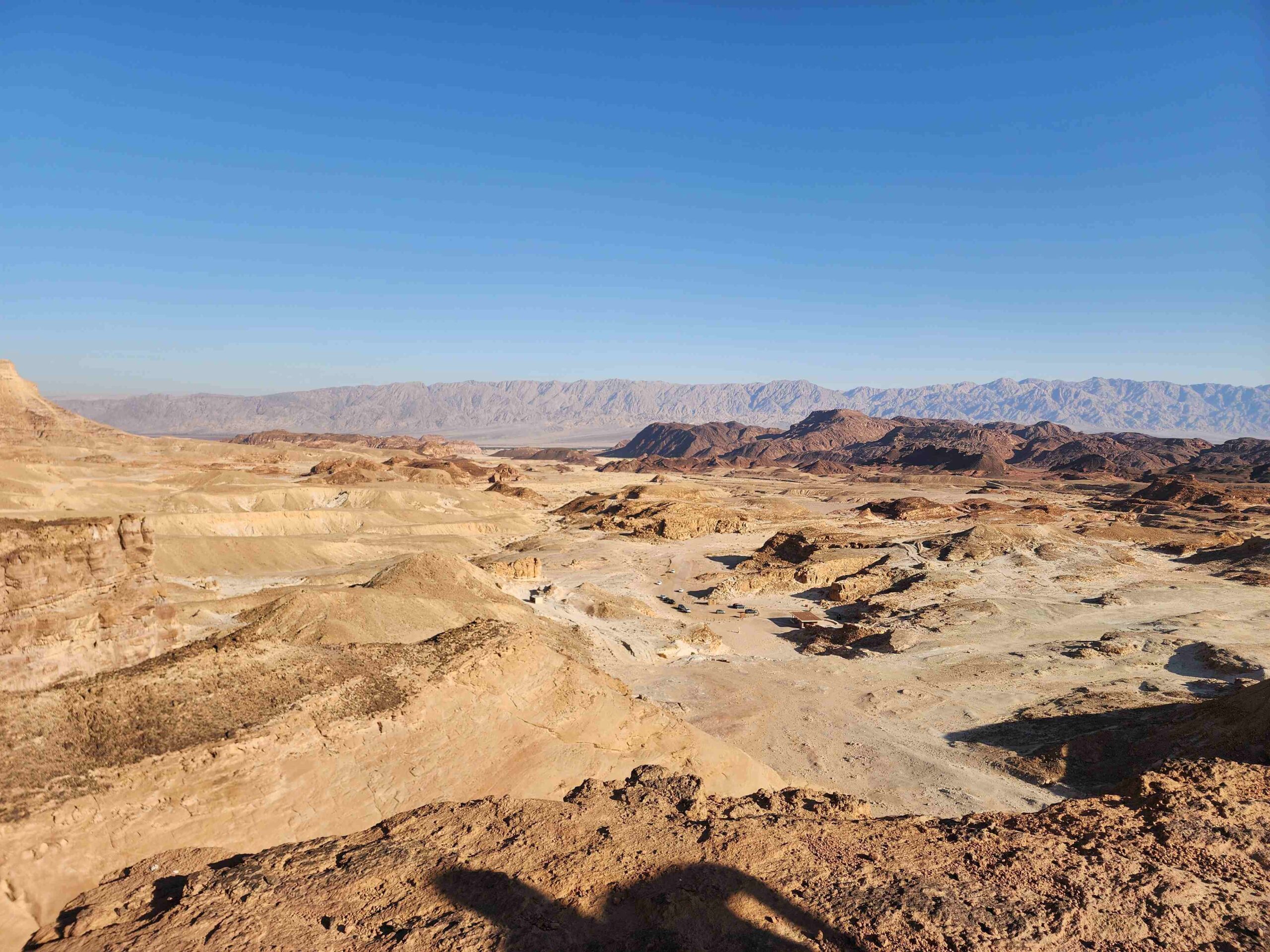
As the first rays of the sun break over the horizon, we reach the summit. On a clear morning, you can stand in one spot and look out over four different nations:
- Israel: Right beneath your feet.
- Jordan: With the rugged Edom Mountains glowing across the Arava Valley.
- Egypt: The Sinai Peninsula rising to the west.
- Saudi Arabia: Visible in the distance along the eastern coast of the Gulf of Aqaba.
The Guide’s Insider Tip: Once the sun has fully risen, take a well-deserved break. I highly recommend packing a classic Israeli Pakal cafe (portable coffee kit) to brew fresh desert tea or cardamom-scented black coffee. There is nothing quite like sipping hot coffee while watching the Red Sea turn a brilliant sapphire blue.
Stop 2: Timna Park—Unearthing the World’s Oldest Copper Mines
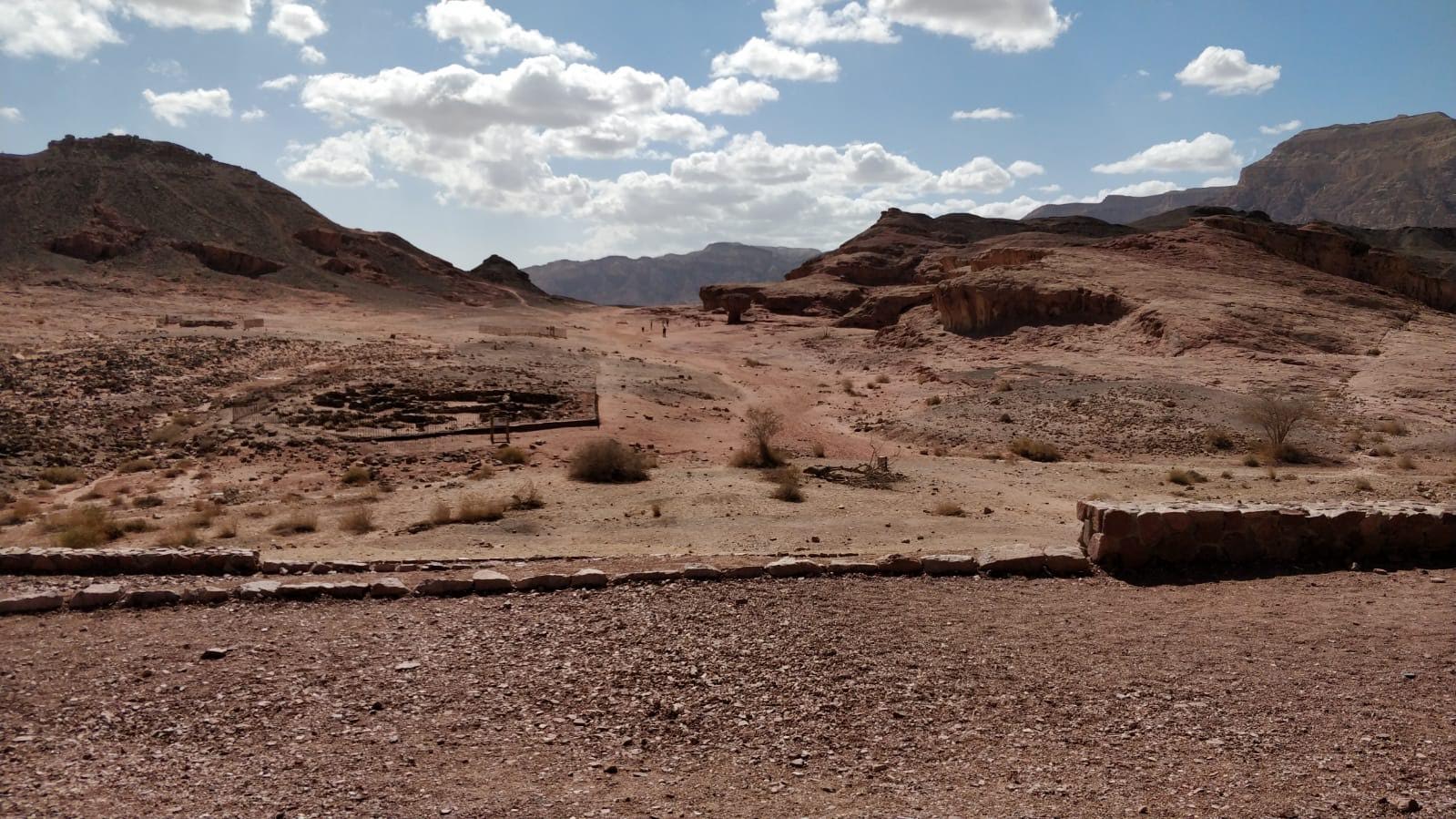
After descending Mount Tzfahot, we head north into the Arava Valley to Timna Park. Nestled inside a massive horseshoe-shaped valley surrounded by steep cliffs, Timna is one of the most remarkable archaeological and geological parks in the world.
The Birthplace of Metallurgy
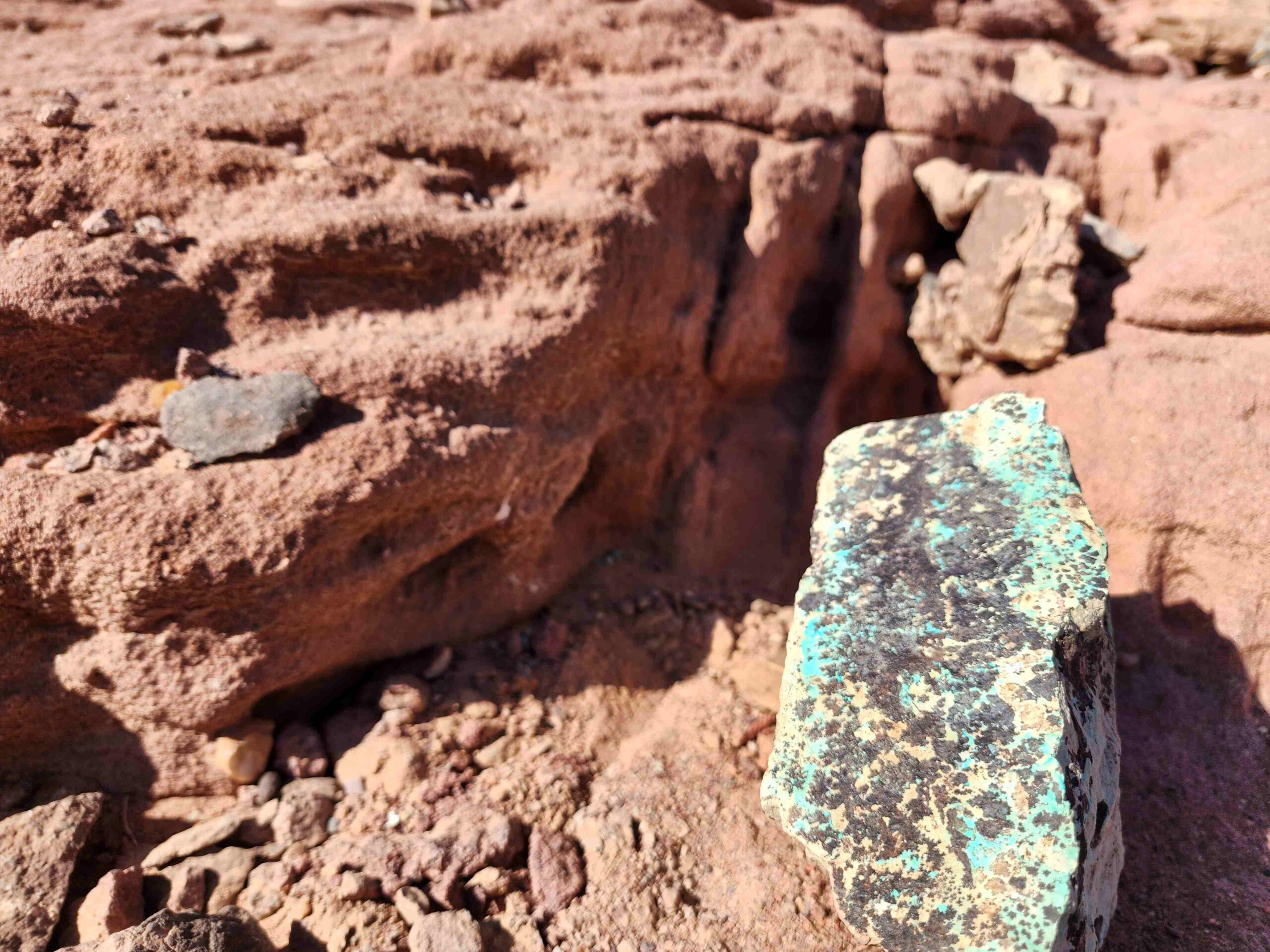
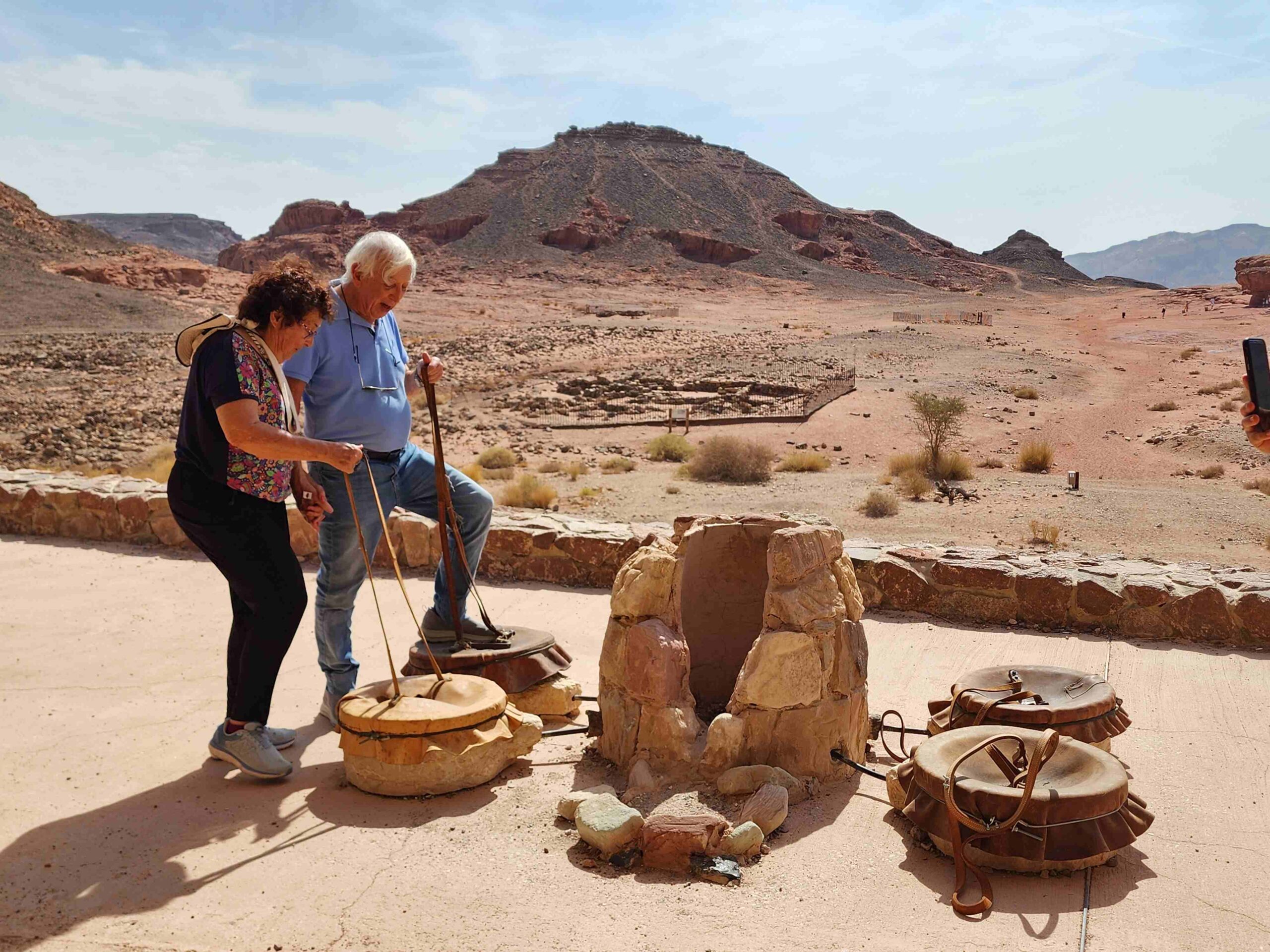
Timna is home to the world’s oldest copper mines. Here, humanity first learned to transition from the Stone Age to the Metal Age.
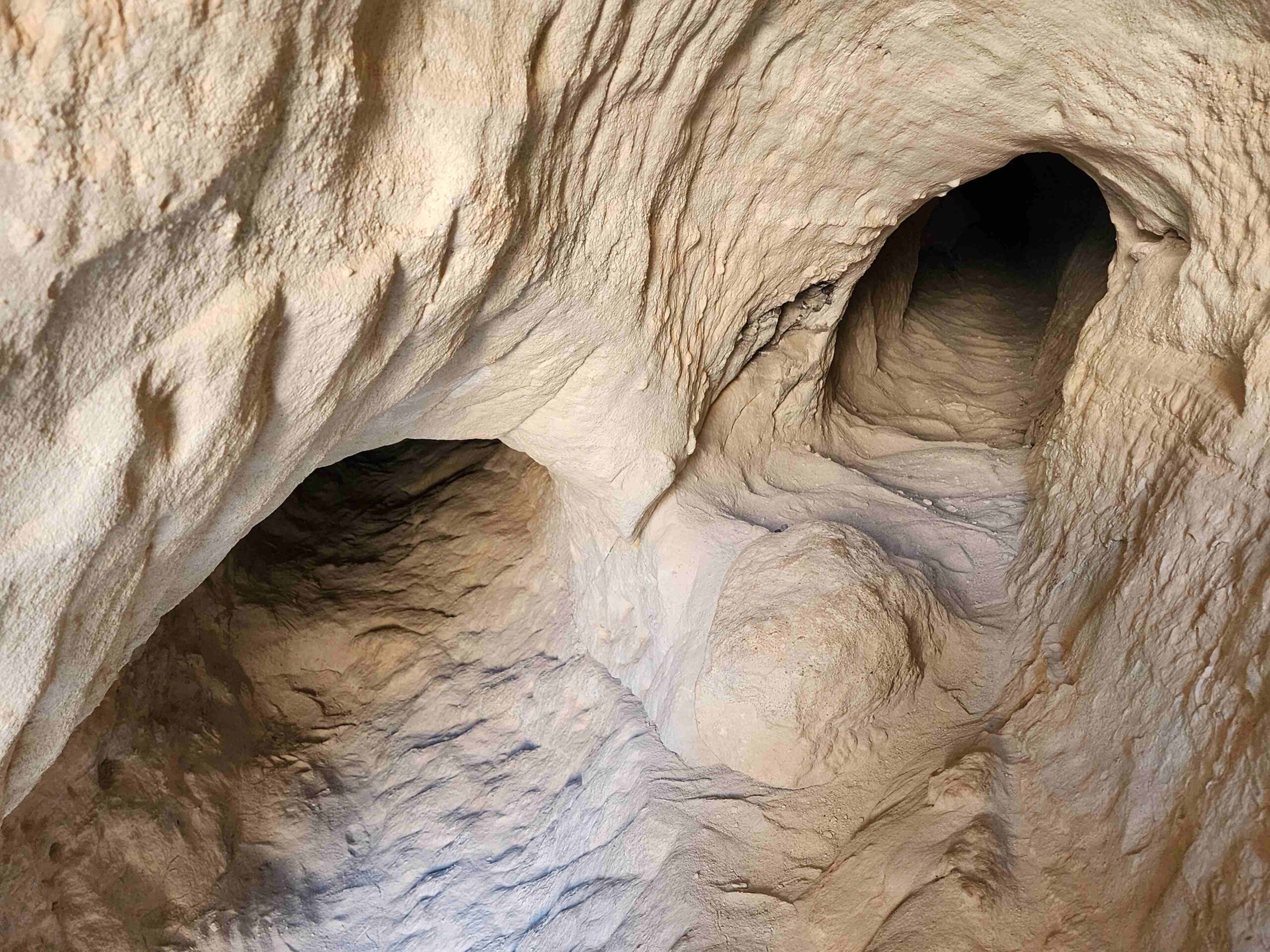
- The Chalcolithic Era (5th Millennium BCE): We will explore the earliest bell-shaped mining shafts, where ancient humans used stone tools to chisel out copper ore.
- The Egyptian New Kingdom (14th–12th Centuries BCE): We will walk through the remnants of a massive, state-run Egyptian mining enterprise. Learn how Egyptian miners smelted copper in high-temperature furnaces and visit the ruins of the Temple of Hathor.
Iconic Geological Landmarks
Beyond history, Timna’s natural sandstone sculptures are breathtaking:
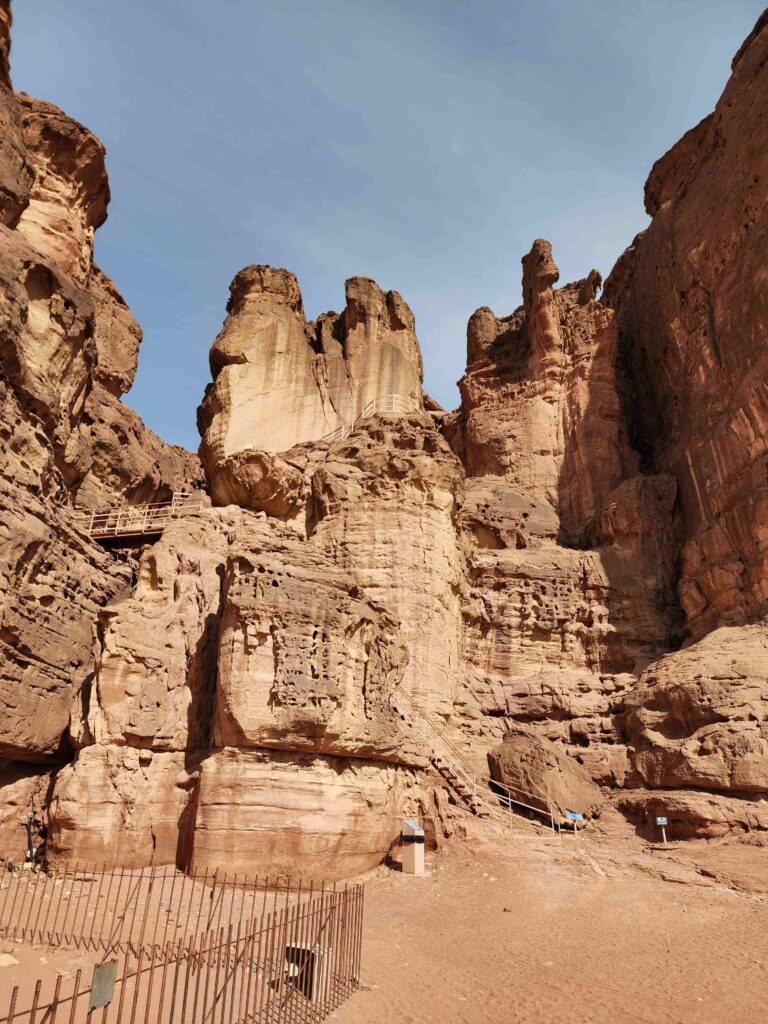
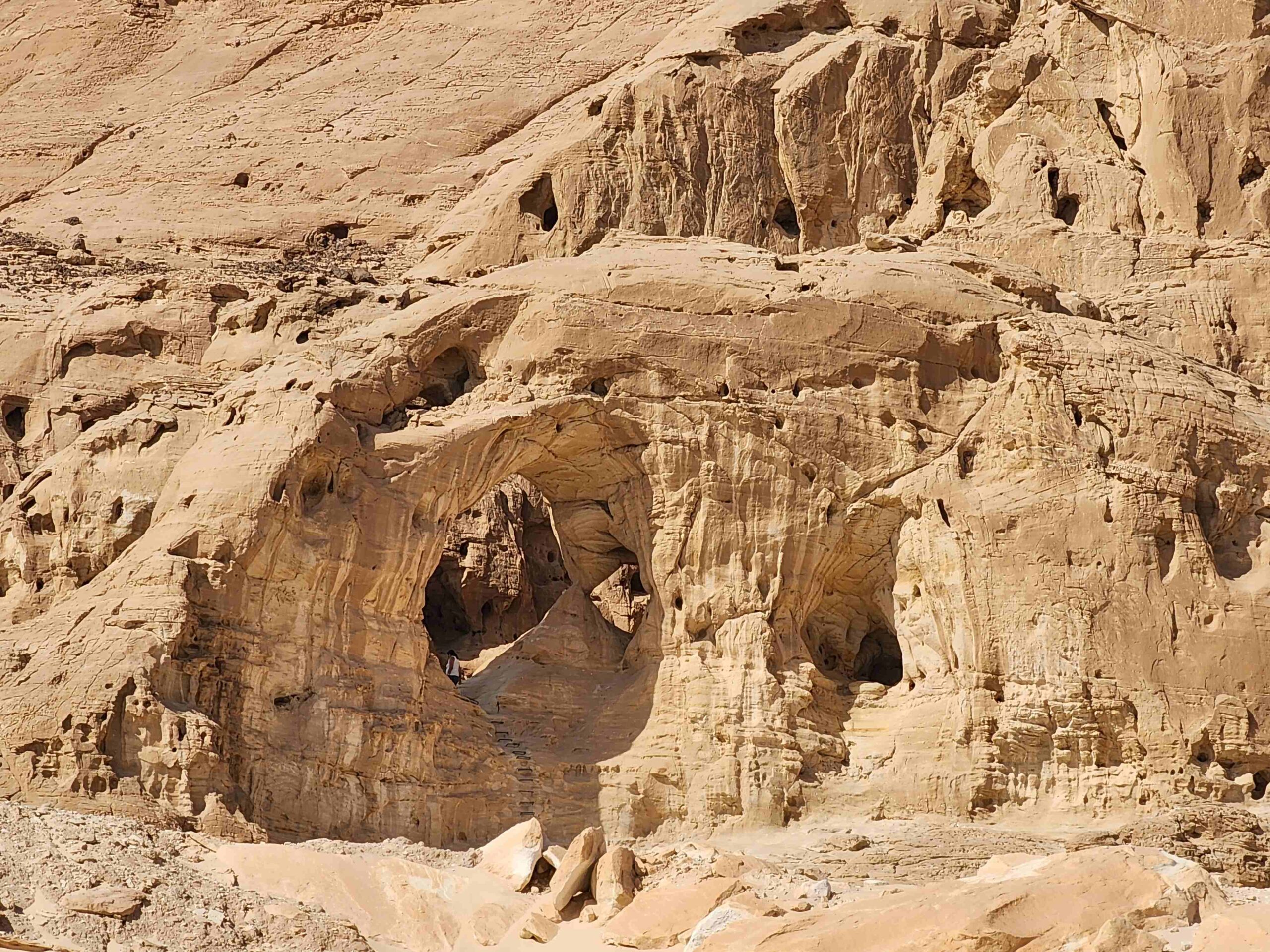
- Solomon’s Pillars: Natural towering pillars of red sandstone, carved over millennia by wind and water erosion.
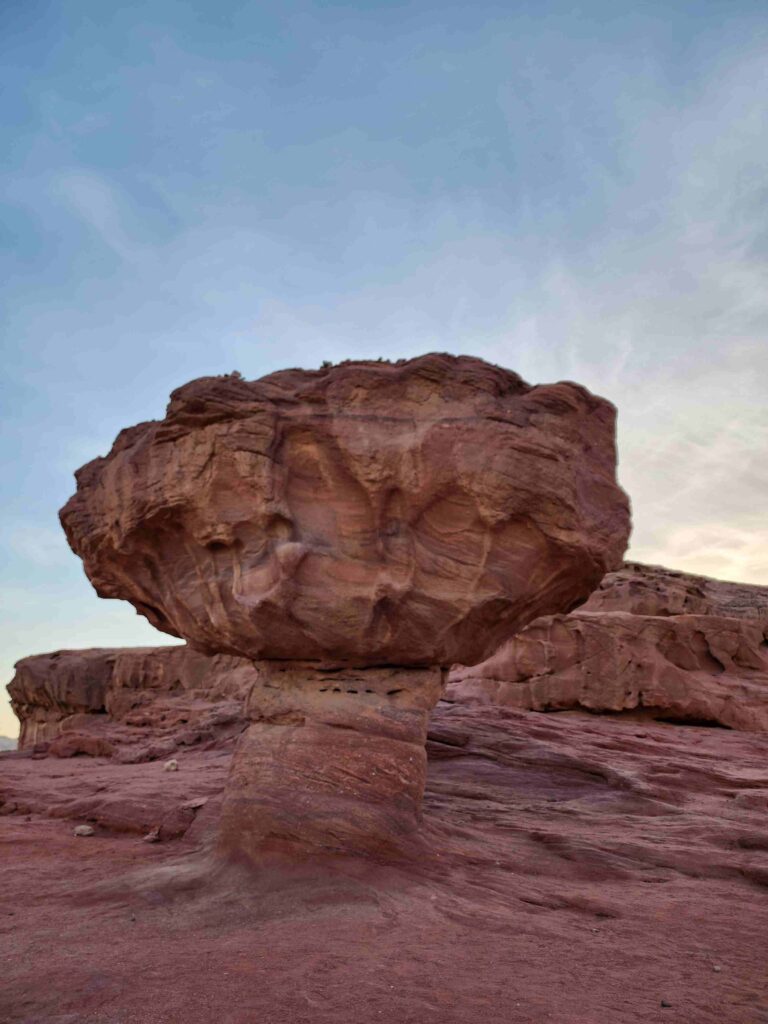
- The Mushroom: A whimsical, gravity-defying rock formation created by the uneven weathering of different sandstone layers.
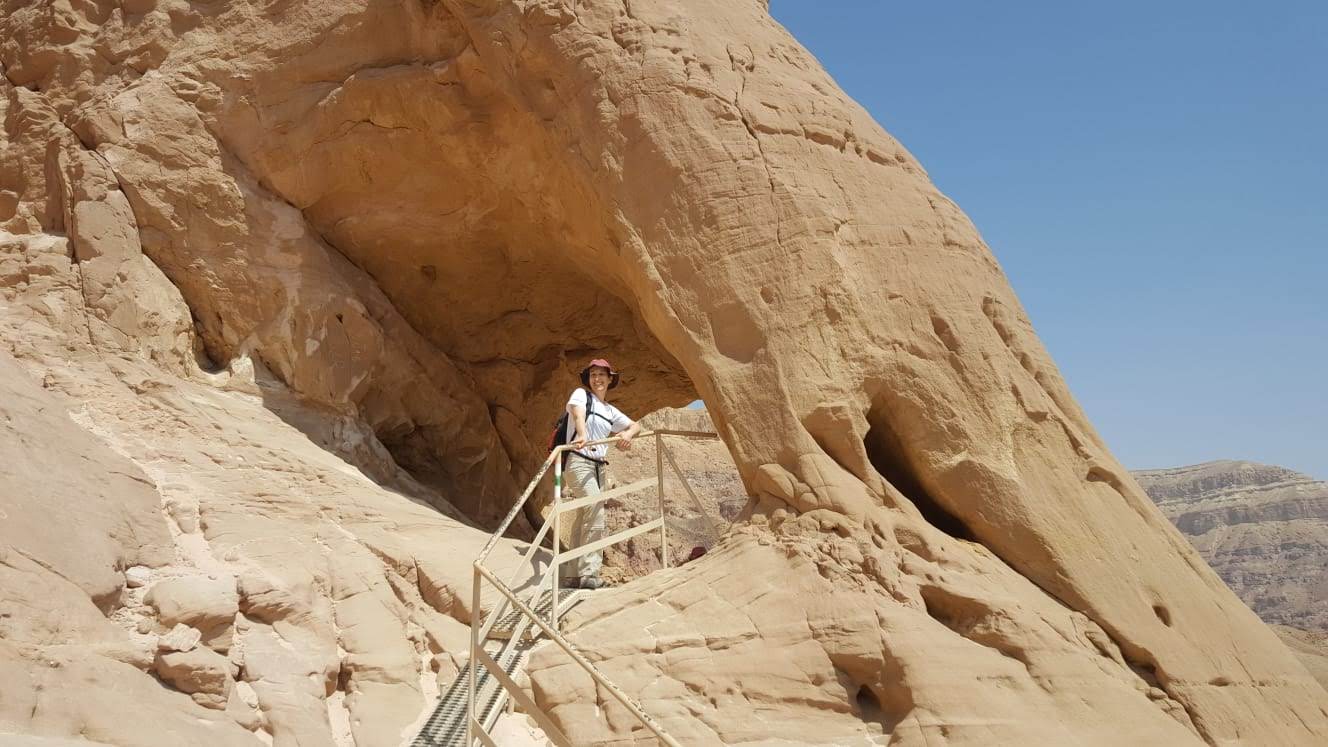
- The Arches: Natural sandstone arches that you can climb up to and explore.
Outdoor Adventure in Timna
Timna Park is vast, and you could easily spend an entire day here. For adventure enthusiasts, the park offers:
- Diverse Hiking Trails: Ranging from short, family-friendly walks to challenging full-day treks up the cliffs.
- Mountain Biking Single-tracks: Timna features professionally built, world-class single-tracks designed for mountain bikers of all skill levels.
- The Lake: A beautiful artificial lake where visitors can pedal boat, fill bottles with colored sand, and enjoy a meal at the park restaurant.
Stop 3: The Red Canyon—A Sandstone Masterpiece
We conclude our desert journey by driving into the high Eilat Mountains toward the Egyptian border to hike the famous Red Canyon in Wadi Shani.
Nature’s Sculpting Hands
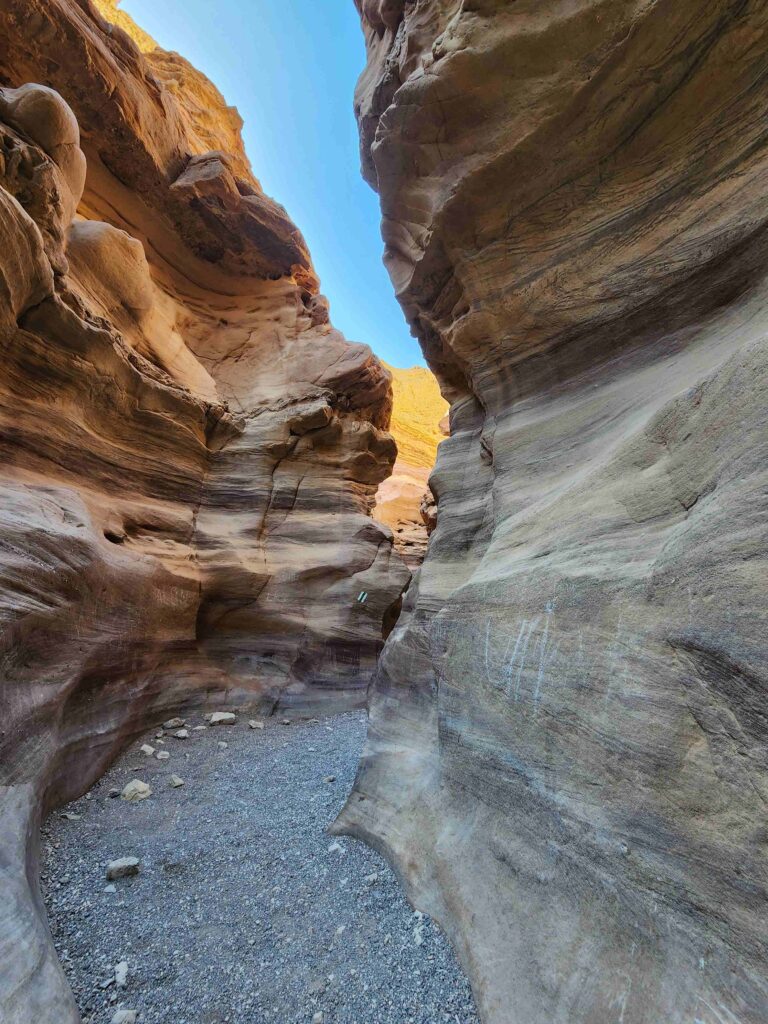
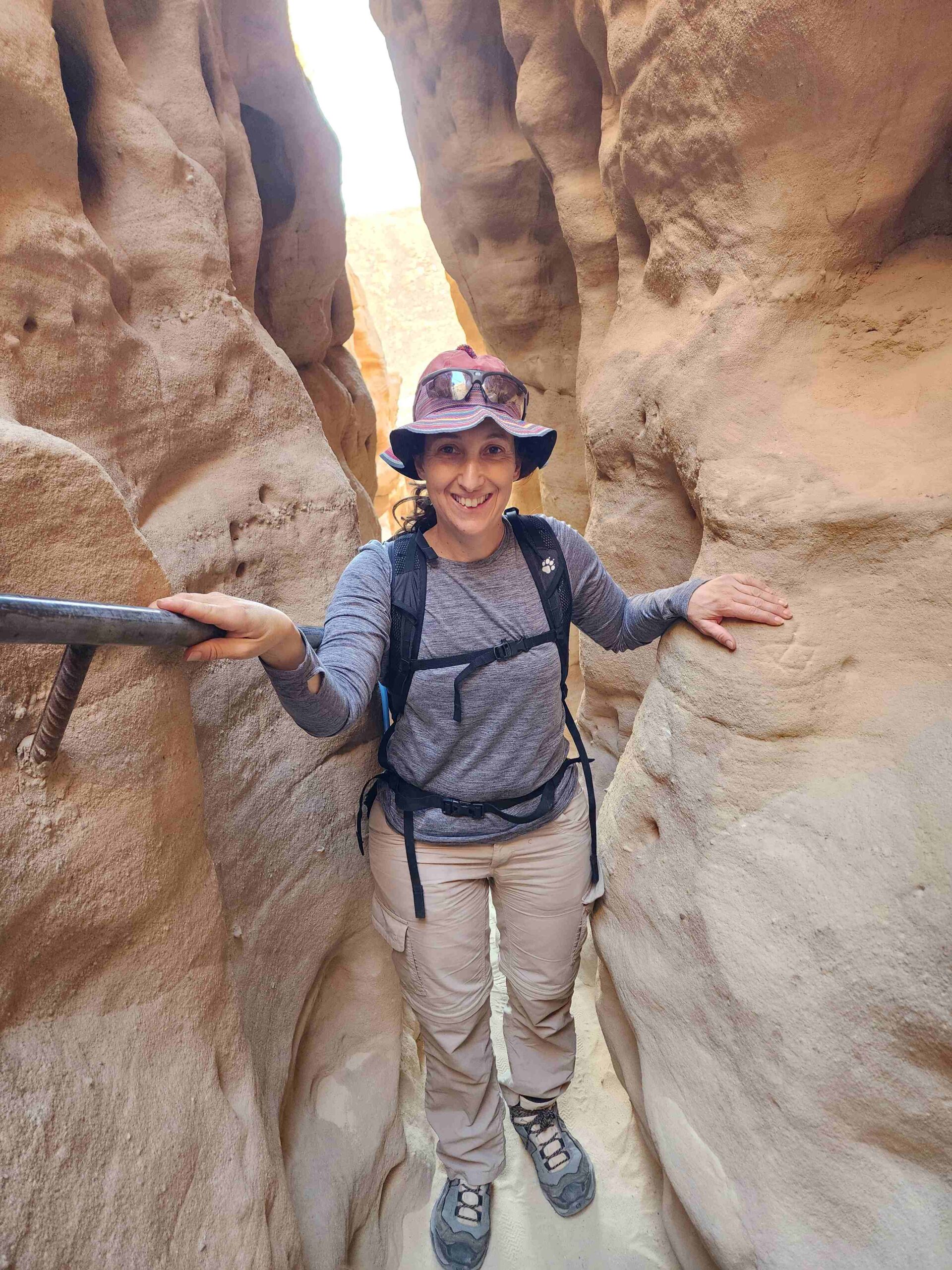
The Red Canyon is a narrow slot canyon carved out of vibrant red and pink Nubian sandstone by seasonal flash floods flowing through Wadi Shani. The wadi originates across the border in the Sinai Desert and cuts through the Eilat Mountains on its way to the Arava.
The Trail Experience
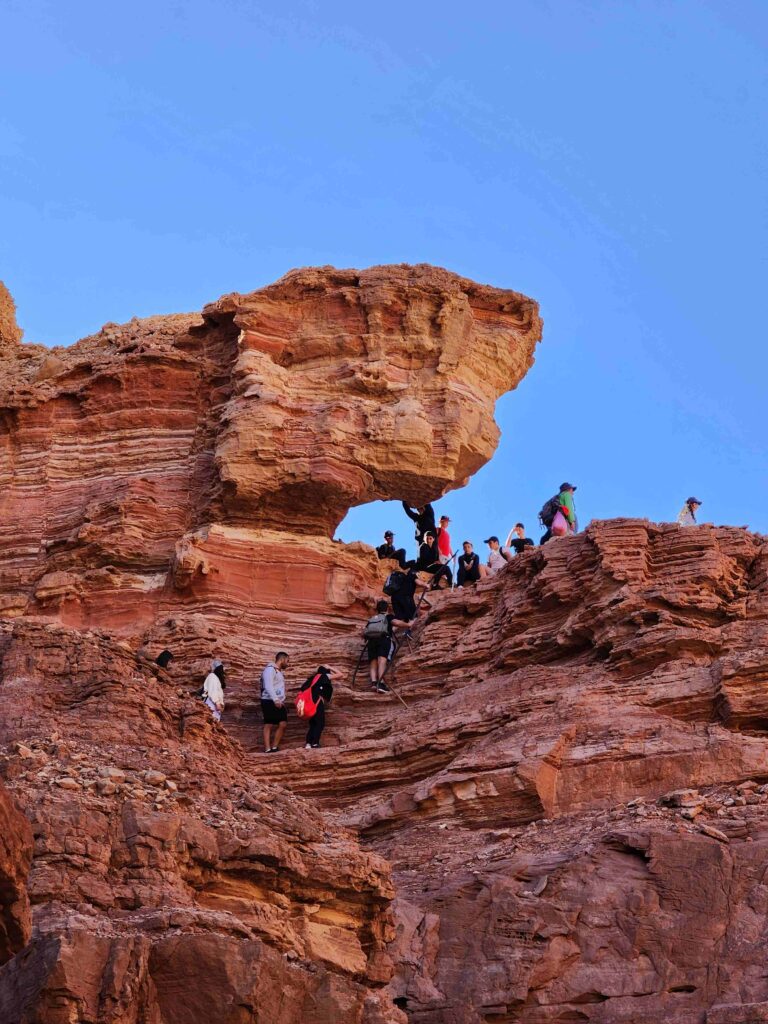
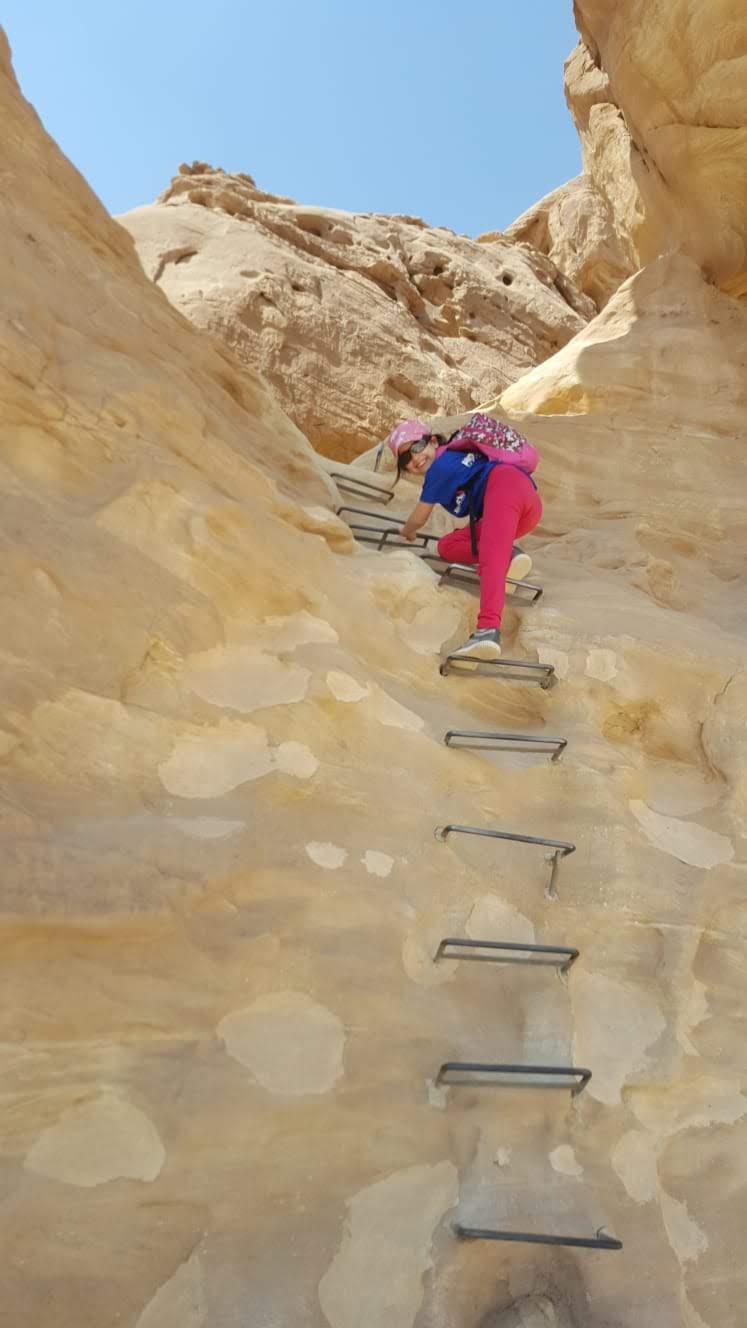
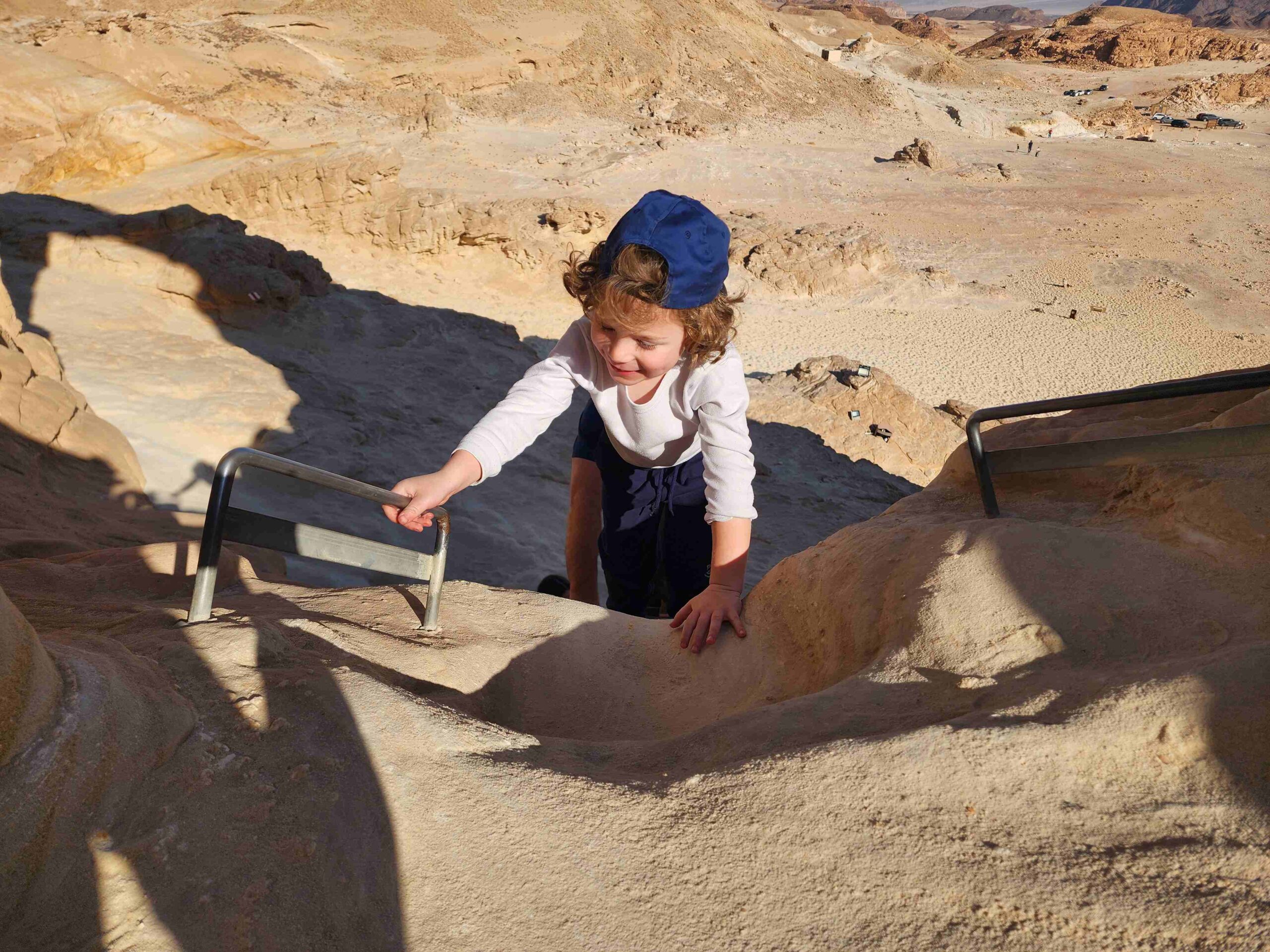
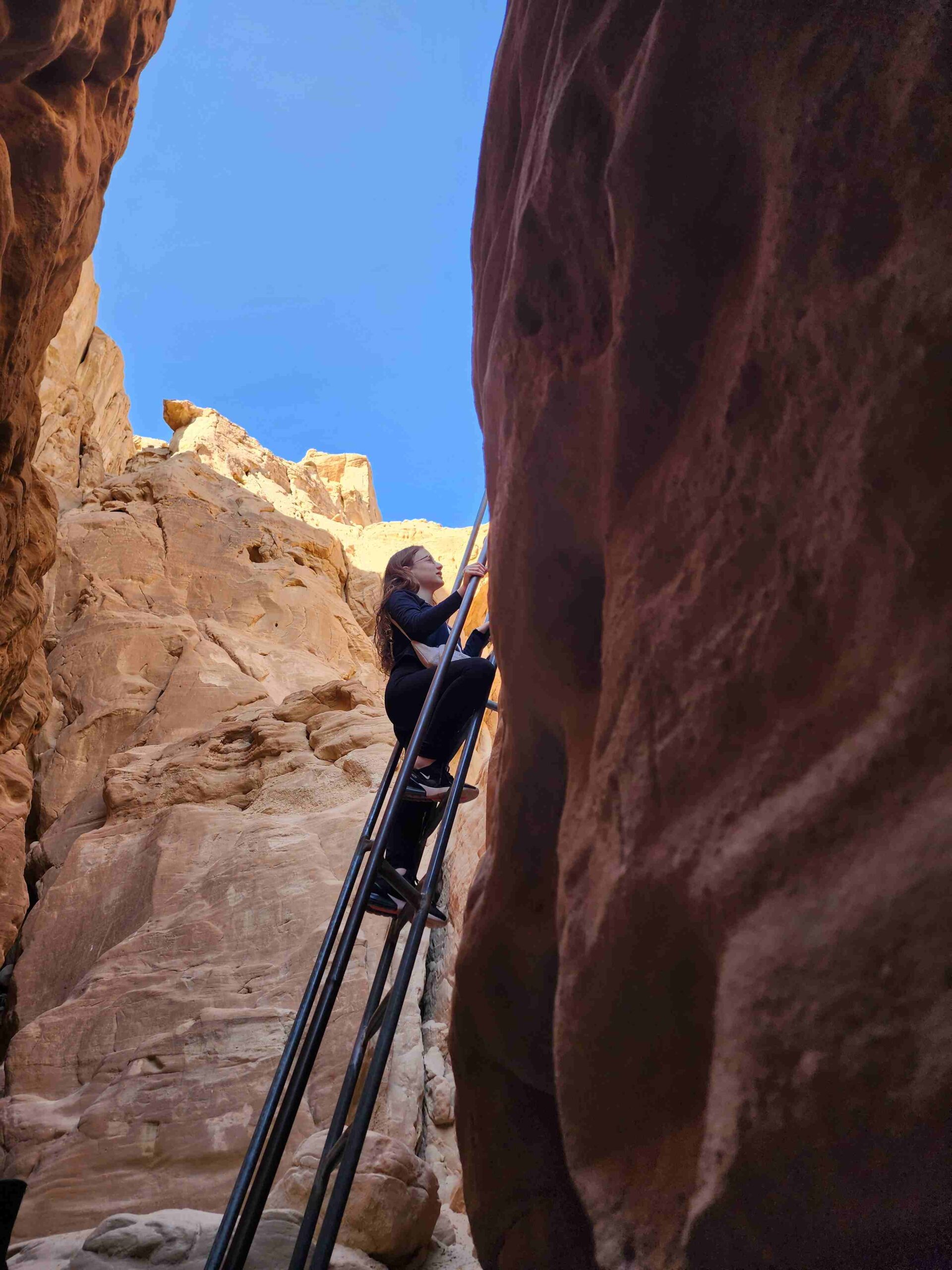
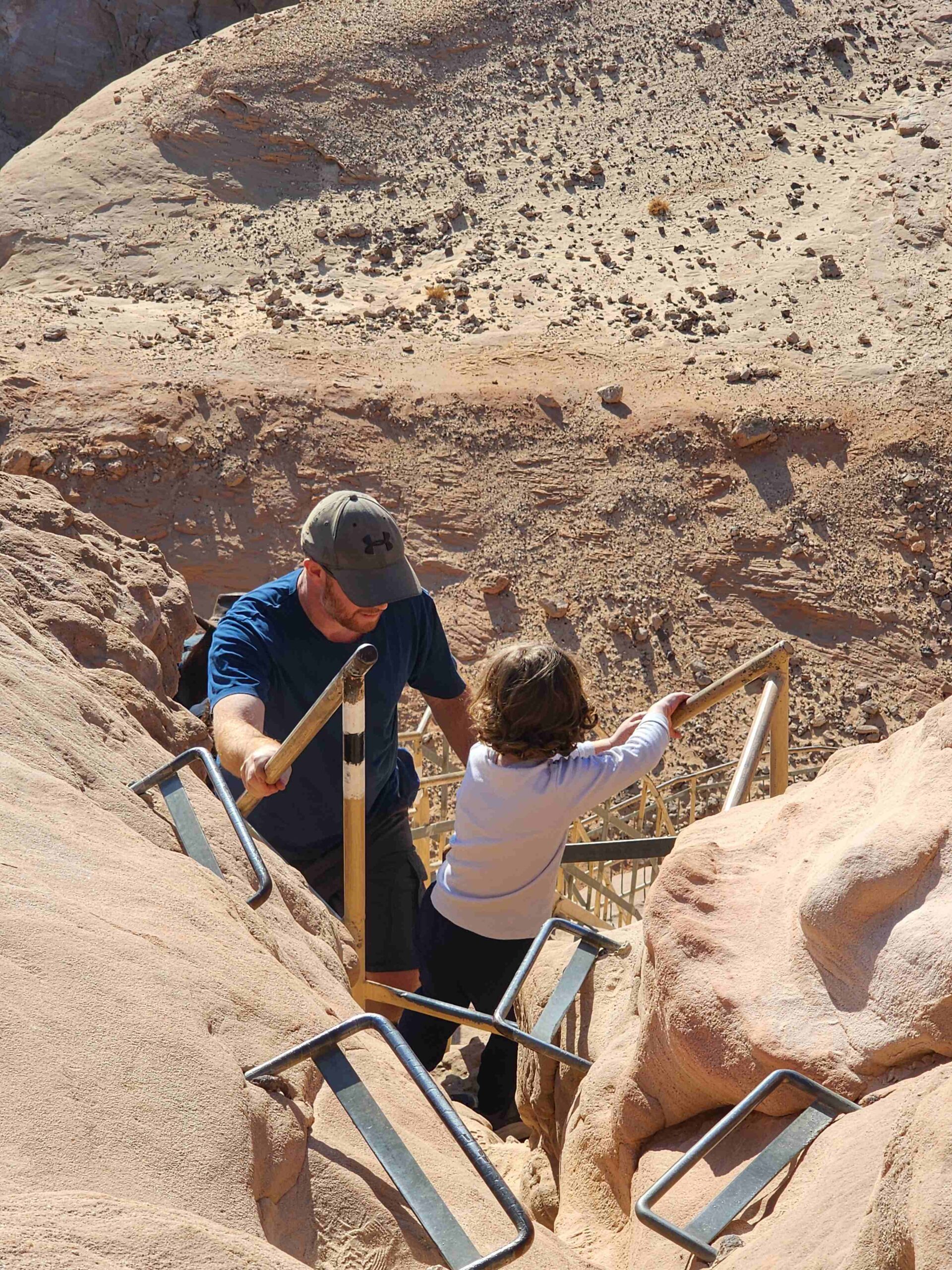
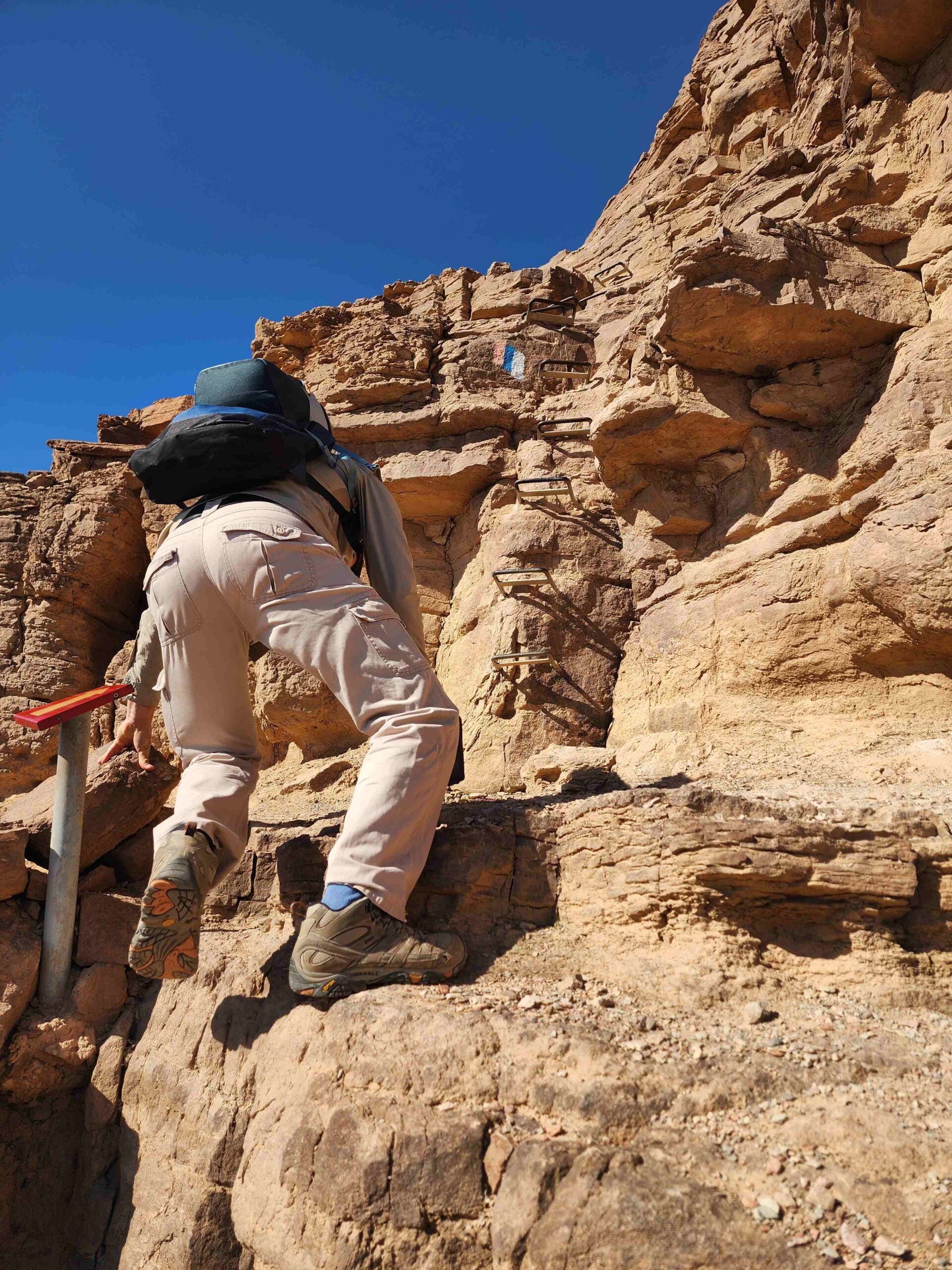
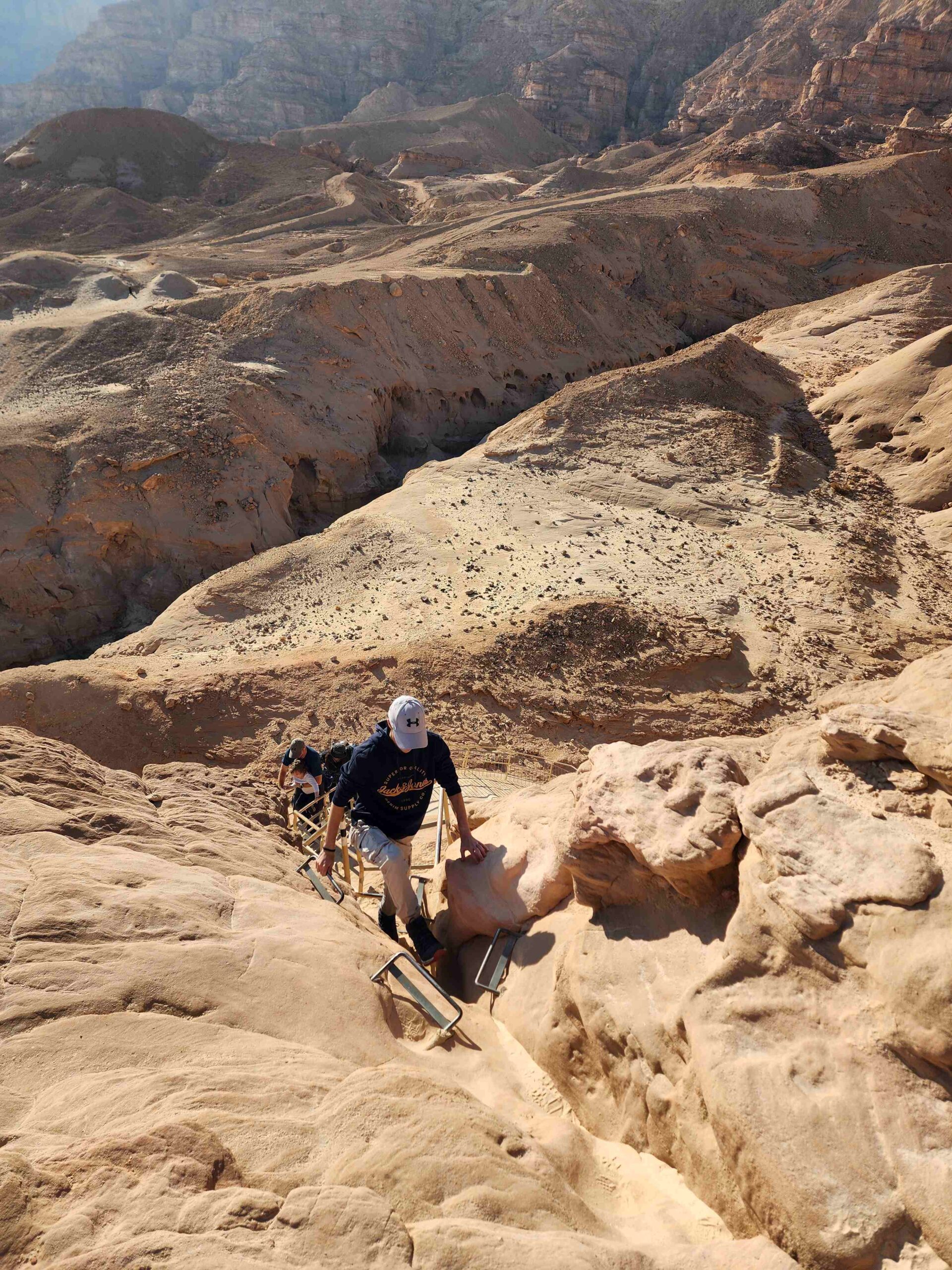
This hike is short (about 1 to 1.5 hours) but highly exhilarating. As the canyon narrows, the sandstone walls rise high above us, blocking out the intense desert sun and creating a pleasantly cool microclimate. We will navigate the narrowest passages with the help of securely anchored iron pegs and ladders. It is a thrilling, hands-on scramble that is incredibly fun for both seasoned hikers and active families.
More Desert Hikes Near Eilat
If you are an avid hiker looking to spend more time on the trails, the Eilat Mountains offer some of Israel’s most dramatic terrain:
- Nahal Gishron (Gishron Stream): A spectacular hike near the Egyptian border, featuring deep canyons, ancient geologic faults, and stunning lookout points.
- Mount Shlomo (Mount Solomon): A challenging, steep climb up the highest peak in the Eilat range. It is a demanding scramble but offers unparalleled rugged beauty.
- Nahal Mapalim (The Waterfalls Canyon): A steep, dramatic trail that descends through dry waterfalls, requiring hikers to navigate sheer rock faces using ladders.
Top Eilat Attractions for Families and Leisure Travelers
After a long day in the desert, you can unwind with some of Eilat’s world-class marine and lifestyle attractions:
- The Underwater Observatory Marine Park: Peer into the coral reef of the Red Sea from a tower submerged six meters below the water’s surface without getting wet.
- Dolphin Reef: A unique, ecological site where you can observe, swim, or dive alongside free-roaming bottlenose dolphins in their natural habitat.
- Coral Beach Nature Reserve: The premier spot in Israel for snorkeling and scuba diving along a breathtaking wall of living coral teeming with colorful tropical fish.
- Desert Adventures: For those who want more speed, you can book thrilling guided tours on Razors (UTVs), EZ Raiders, quad bikes, or opt for a traditional camel trek at sunset.
- Action Parks: Challenge yourself at local high-ropes courses, climbing walls, and extreme sports centers along the coast.
- Red Sea Lookout (Mitzpor HaYam HaAdom): A stunning, easily accessible observation point offering a bird’s-eye view of the entire Gulf of Aqaba and the surrounding border triangle.
Practical Information for Eilat Desert Hikes
Best Time to Visit
The desert around Eilat is beautiful year-round, but summer temperatures can easily exceed 40°C (104°F), making daytime hiking dangerous. The ideal time for hiking is from October to April. If you visit in the summer, limit hiking to early morning hours (like our sunrise trek up Mount Tzfahot) and drink plenty of water.
What to Pack
- Water: At least 3 liters per person for a half-day hike.
- Footwear: Sturdy hiking shoes with good grip are essential for the rocky terrain.
- Sun Protection: Sunscreen, a wide-brimmed hat, and sunglasses.
- Layers: Desert mornings can be surprisingly cold, especially during the winter. Bring a light jacket or fleece for the sunrise hike.
Trip Overview
Duration:
Full Day (Approx. 8-10 hours, depending on your starting point)
Pace:
Flexible and tailored to your interests
Activity Level:
Moderate to High
Highlights:
ancient Archaeology, Geological formations, advetures hiking, and panoramic vistas
Frequently Asked Questions (FAQ)
Is the Red Canyon suitable for children?
Yes! The short loop of the Red Canyon is highly popular with families. Children who are comfortable climbing up and down ladders with adult supervision will find the hike incredibly fun. However, it is not suitable for strollers or carrying very young toddlers in your arms while climbing.
Can I visit Timna Park and the Red Canyon without a rental car?
While there are occasional public buses that stop on the main highway near these sites, it requires a significant walk under the hot sun to reach the actual trailheads. To get the most out of your day, it is highly recommended to rent a car or, better yet, book a private guided tour that includes transportation.
Are there entry fees for these sites?
Mount Tzfahot and the Red Canyon are located inside open nature reserves and are completely free to hike.
Timna Park is a managed park and requires an entry fee (which goes toward the preservation and maintenance of the archaeological sites).
Customizing Your Experience
The desert offers endless possibilities. This itinerary serves as a starting point and can be adjusted based on your physical preference, specific interests (such as botany, birdwatching, or archaeology), or the time of year. Ready to plan your desert day? I invite you to reach out so we can discuss your preferences and create a tailor-made experience that fits your pace and style.
It's time to go on a trip
Leave your details and we will contact you