
Hiking Mount Negev: The Small Fin Loop, Yeruham Crater, and Mamshit National Park
Welcome to the Mount Negev region – a landscape carved by deep geological time, ancient trade routes, and silent desert beauty. As a licensed Israeli tour guide, one of my favorite secrets to share with visitors is that you do not need to travel all the way to the far south to experience the raw magic of Israel’s craters.
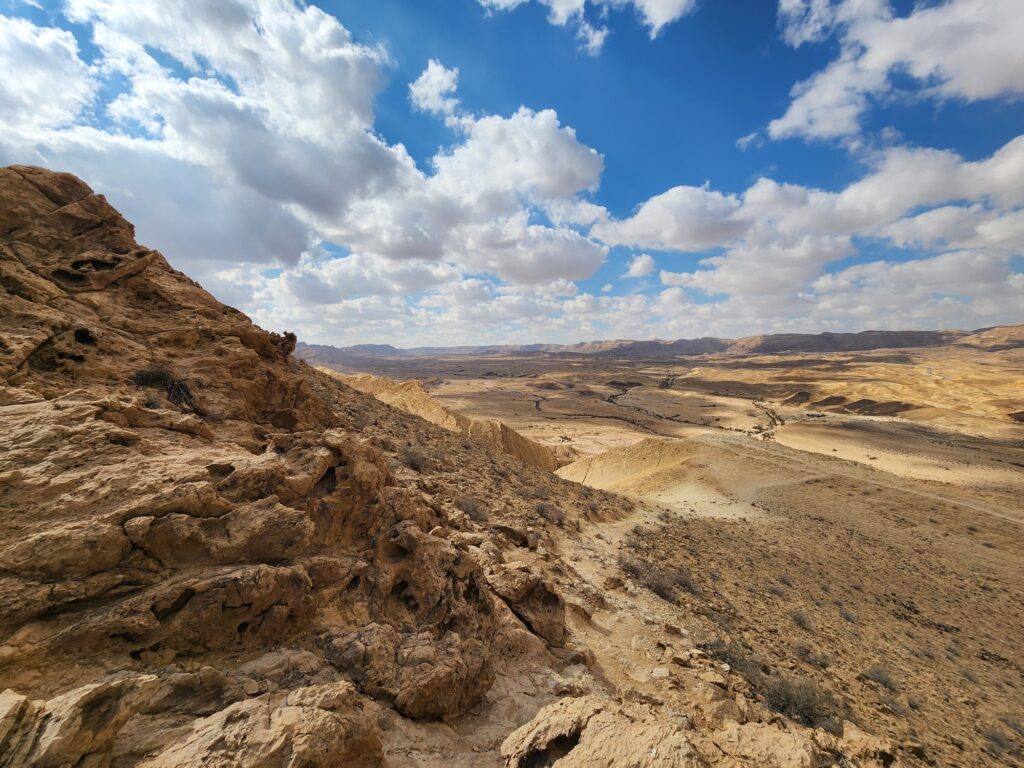
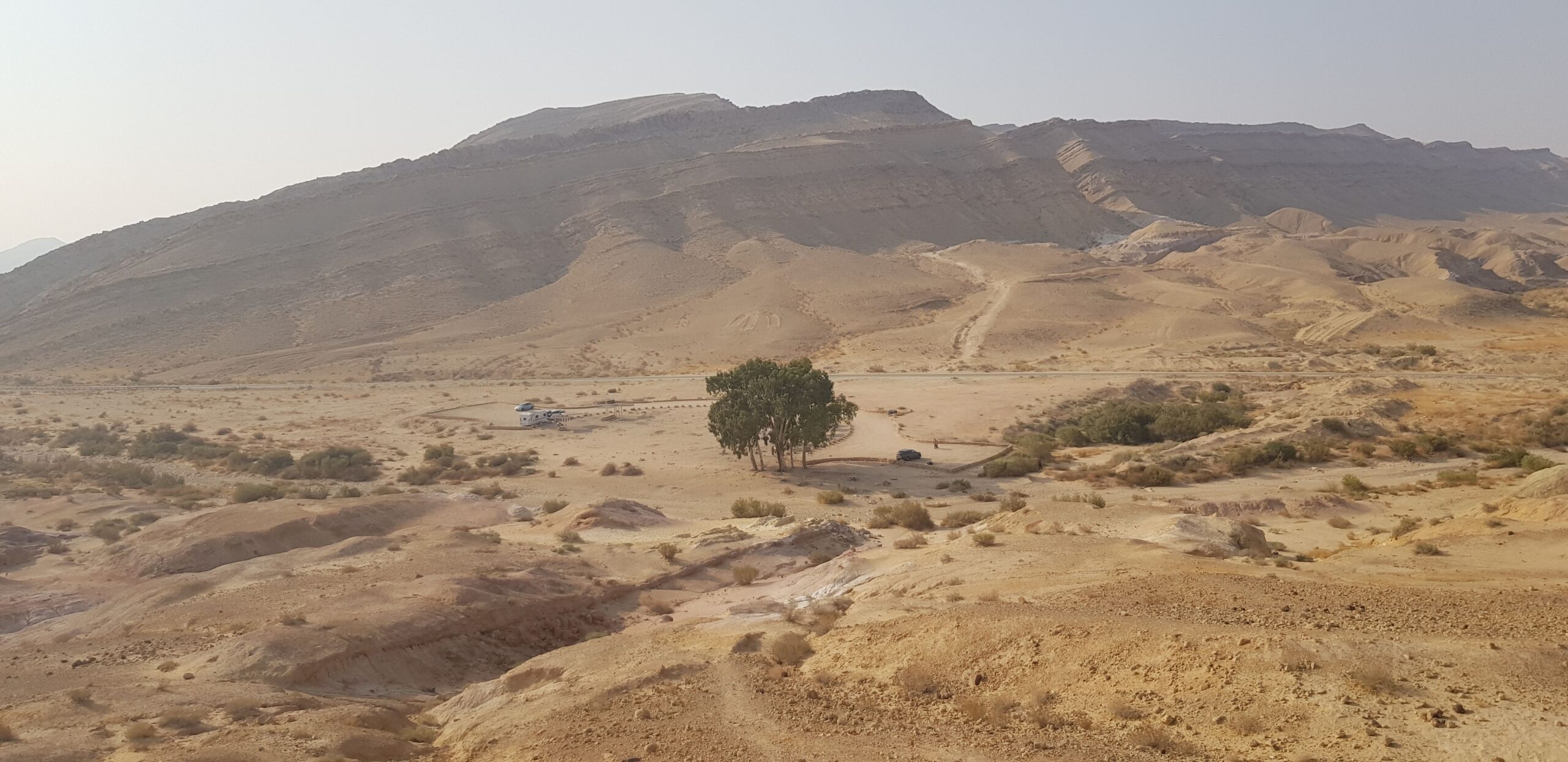
Just a short drive from the desert town of Yeruham lies the Yeruham Crater (historically known as HaMakhtesh HaGadol, or the Large Crater). This spectacular geological formation offers one of the most exciting, rewarding, and family-friendly loop trails in the country: The Small Fin (Hebrew: HaSnapir HaKatan).
What is a Makhtesh? The Geology Behind the Wonder
Before we lace up our hiking boots, it is helpful to understand the ground we are walking on. A makhtesh (plural: makhteshim) is not a volcanic crater or a meteor impact site. It is a geological erosion crater</strong
Before we lace up our hiking boots, it is helpful to understand the ground we are walking on. A makhtesh (plural: makhteshim) is not a volcanic crater or a meteor impact site. It is a geological erosion crater—a phenomenon so unique to Israel and the Sinai Peninsula that geologists worldwide use the Hebrew word makhtesh to describe it.
There are only seven of these landforms in the entire world. Five of them are right here in Israel’s Negev Desert:
- Makhtesh Ramon (the largest)
- Yeruham Crater (formerly “The Large Crater”)
- The Small Crater (HaMakhtesh HaKatan)
- The Arif Craters (two smaller, twin craters)
Why the Name Change?
For decades, locals referred to this site as HaMakhtesh HaGadol (The Large Crater). However, after geologists mapped the much larger Makhtesh Ramon further south, the name became technically inaccurate. In recent years, as part of an effort to promote local tourism and celebrate the nearby town, its official name was updated to the Yeruham Crater.
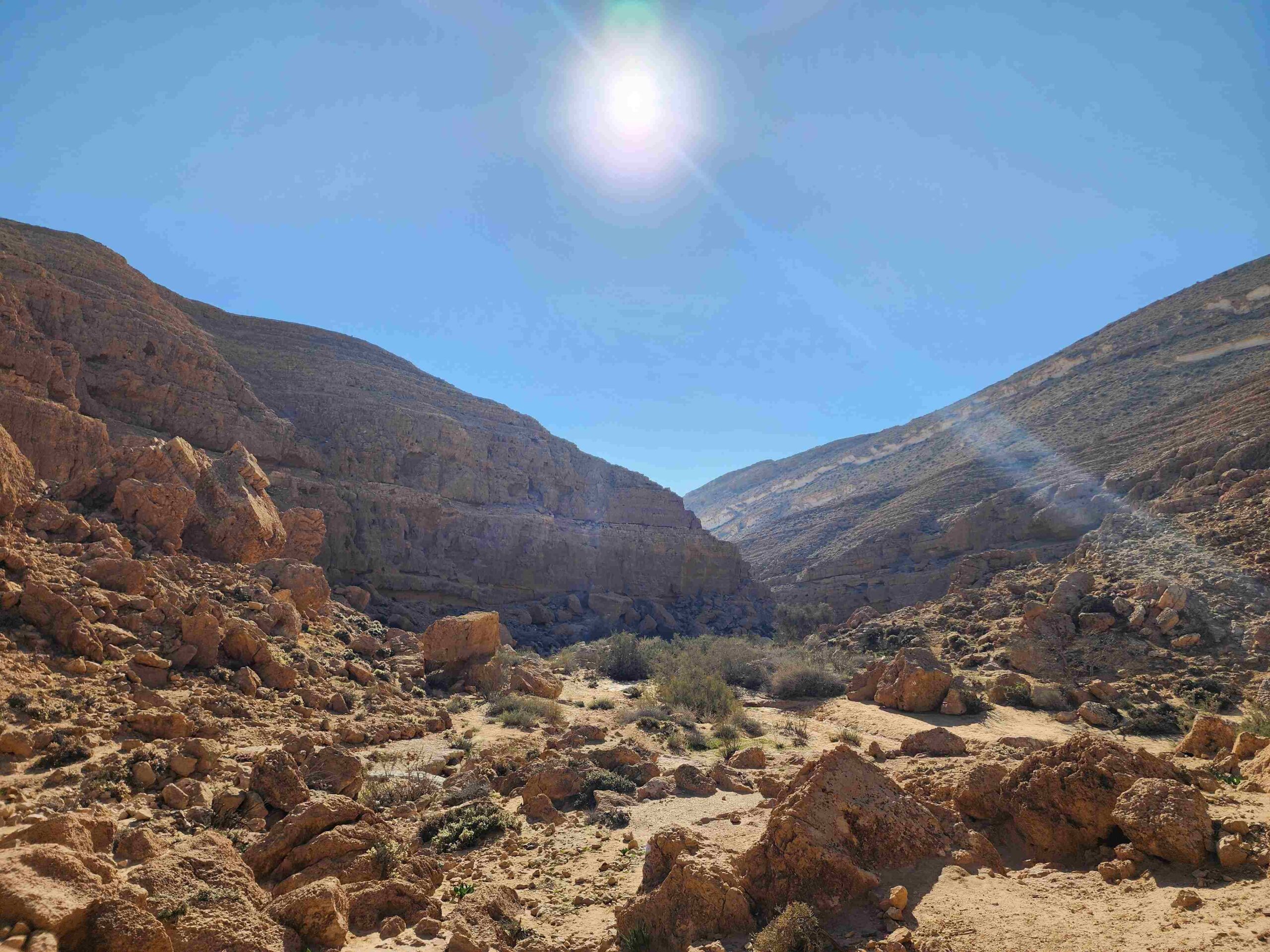
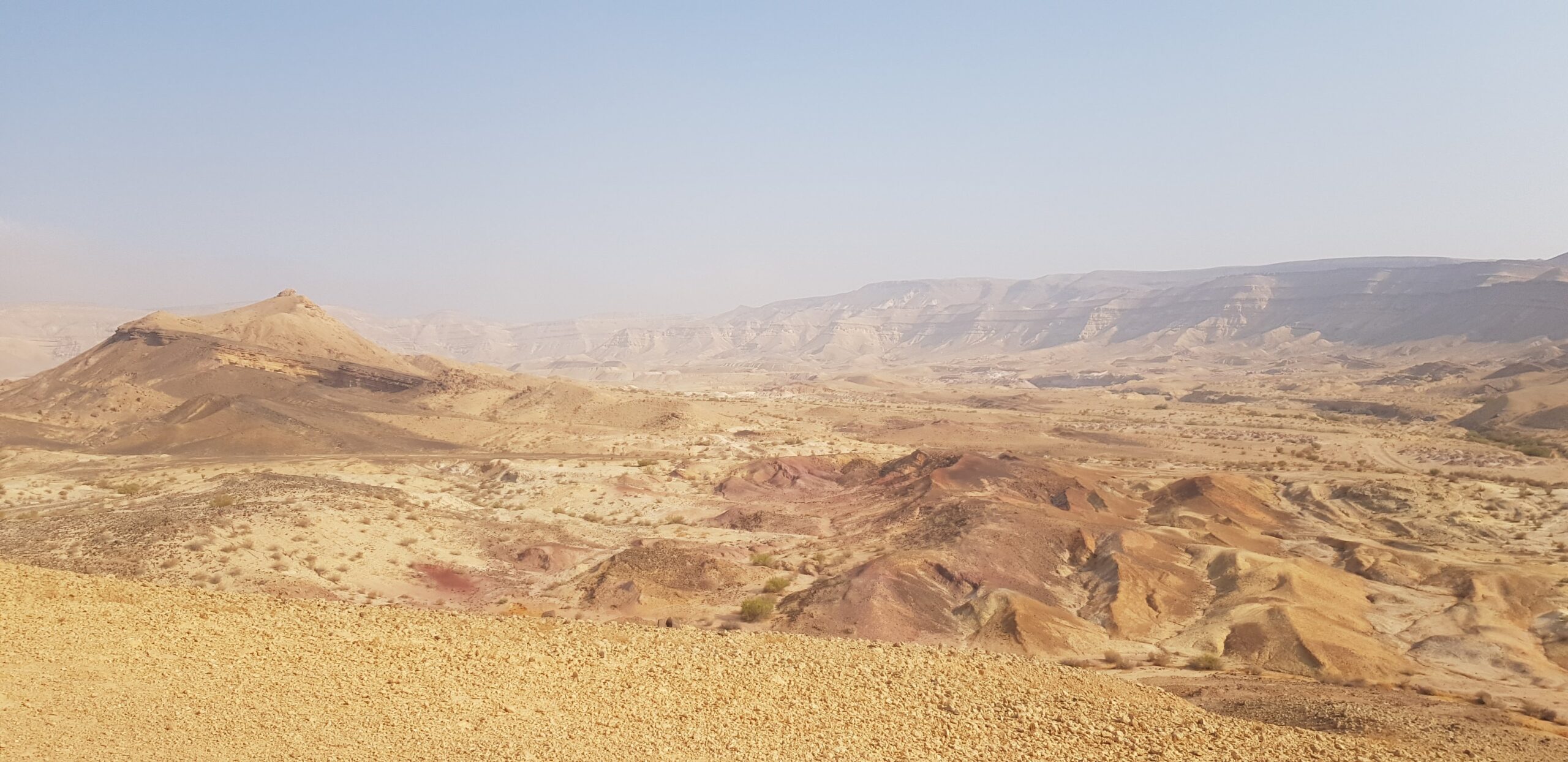
These craters were formed over millions of years through a process of tectonic uplift, folding, and water erosion. When the oceans receded, the soft sandstone inner layers of the ridge were washed away, leaving behind a hollowed-out “bathtub” framed by towering walls of hard limestone.
A phenomenon so unique to Israel and the Sinai Peninsula that geologists worldwide use the Hebrew word makhtesh to describe it.
There are only seven of these landforms in the entire world. Five of them are right here in Israel’s Negev Desert:
- Makhtesh Ramon (the largest)
- Yeruham Crater (formerly “The Large Crater”)
- The Small Crater (HaMakhtesh HaKatan)
- The Arif Craters (two smaller, twin craters)
Why the Name Change?
For decades, locals referred to this site as HaMakhtesh HaGadol (The Large Crater). However, after geologists mapped the much larger Makhtesh Ramon further south, the name became technically inaccurate. In recent years, as part of an effort to promote local tourism and celebrate the nearby town, its official name was updated to the Yeruham Crater.
These craters were formed over millions of years through a process of tectonic uplift, folding, and water erosion. When the oceans receded, the soft sandstone inner layers of the ridge were washed away, leaving behind a hollowed-out “bathtub” framed by towering walls of hard limestone.
Hiking the Small Fin (HaSnapir HaKatan) Loop
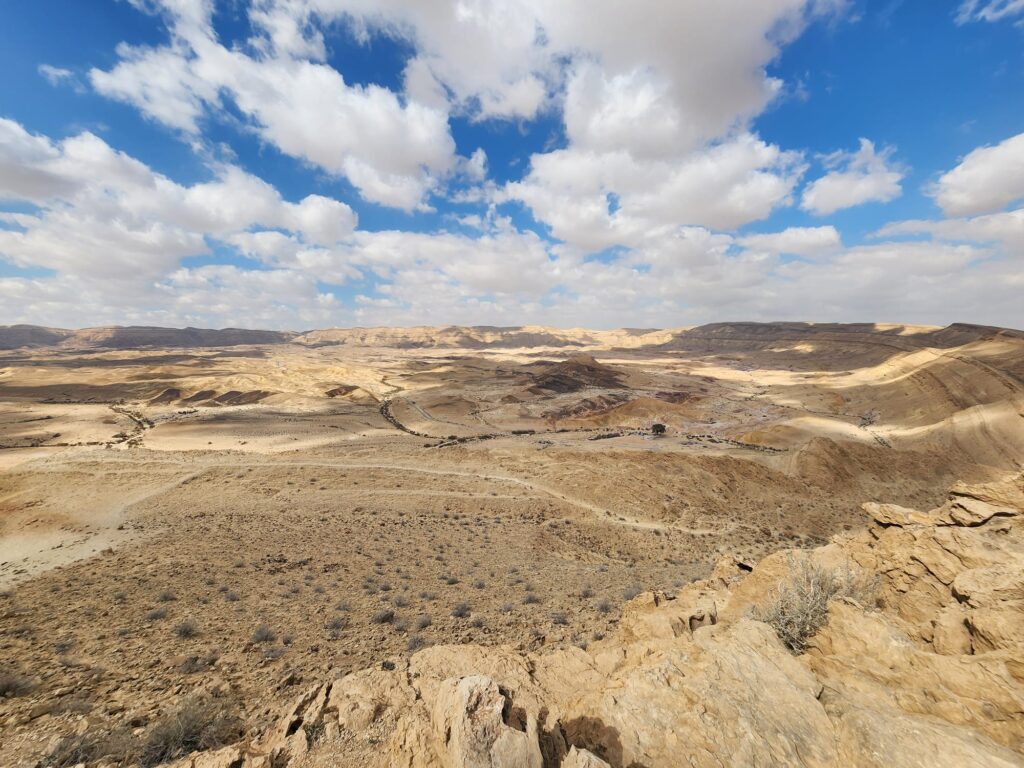
This classic, moderate trail provides some of the most dramatic panoramic views of the crater’s interior. It is an adventurous, engaging hike that children love and adults find incredibly scenic.
Step-by-Step Trail Guide
1. The Trailhead
Your journey begins at the Colored Sands Car Park. From the parking lot, carefully walk eastward along the shoulder of the road (heading out of the crater). Within a few minutes, you will see a clear trail sign on your right pointing toward “The Small Fin” (HaSnapir HaKatan) marked with green trail blazes.
2. Climbing the Ridge Line
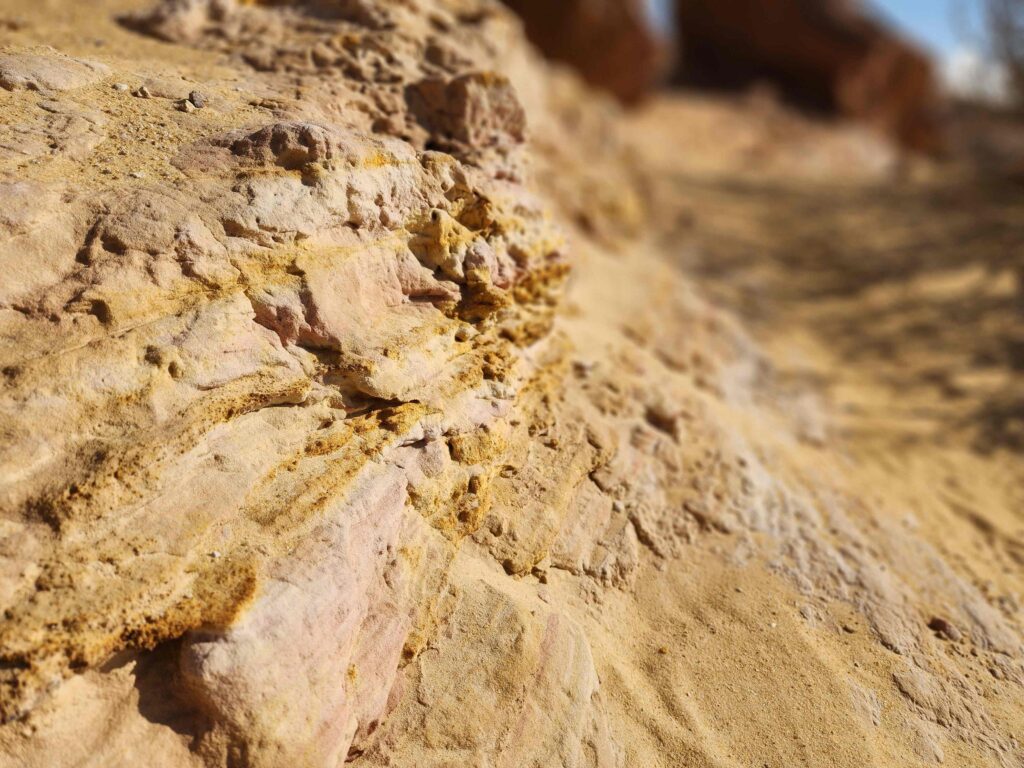
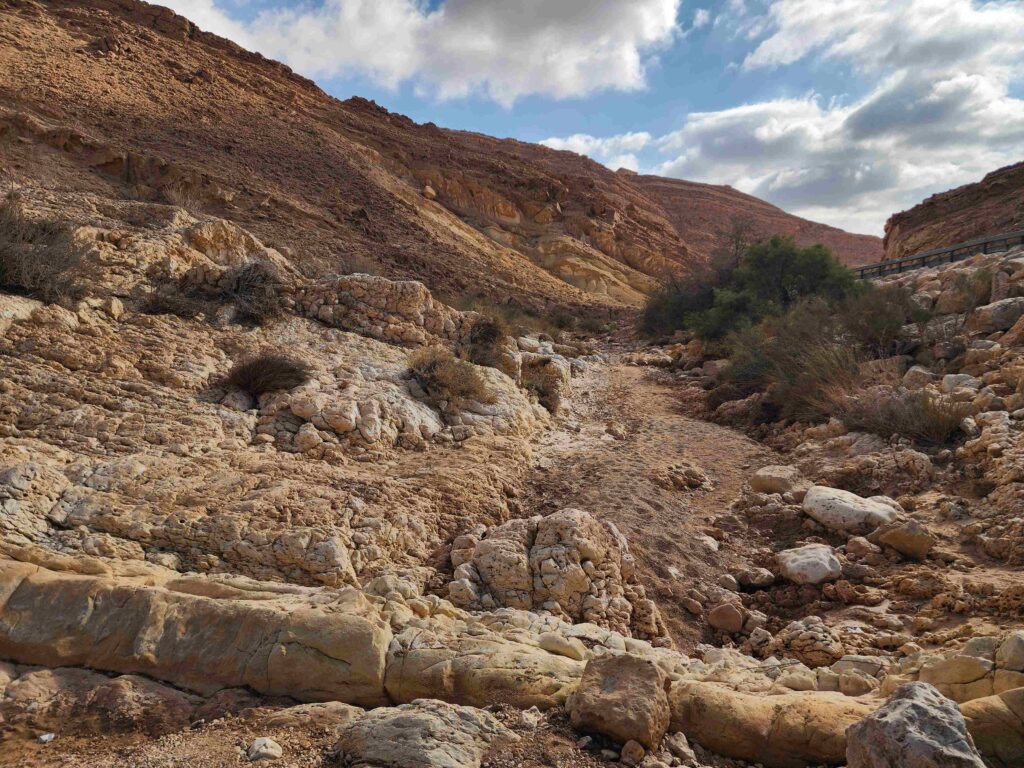
Follow the green trail as it begins its ascent up the ridge. The climb is steady and requires physical effort. Do not rush! Take your time, pace your breathing, and look closely at the rock walls around you. You will notice colorful, slanted layers of ancient marine sediment—remnants of the ancient Tethys Ocean that once covered this entire region. As you ascend, the vastness of the crater slowly unfolds behind you.
3. The Small Fin Viewpoint
At the top of the ridge, you will reach a trail junction where the green trail meets a black trail. To reach the ultimate viewpoint, turn left onto the black trail. This short, steep climb leads you to the narrow ridge known as the “Small Fin.”
Once at the summit, the entire Yeruham Crater stretches out before you like a giant, geological amphitheater. It is the perfect spot for photos, a water break, and—if you are traveling on a guided tour—an interactive explanation of how these ancient stone layers were folded and carved by nature.
4. An Adventurous Descent via Nahal Hatira
After enjoying the views, retrace your steps back to the trail junction and continue following the black trail. This is the most thrilling part of the hike: a steep descent down the rocky slope assisted by sturdy metal rungs (yatedot) anchored directly into the stone. Kids will feel like mountaineers, and adults will get a fun, hands-on climbing experience.
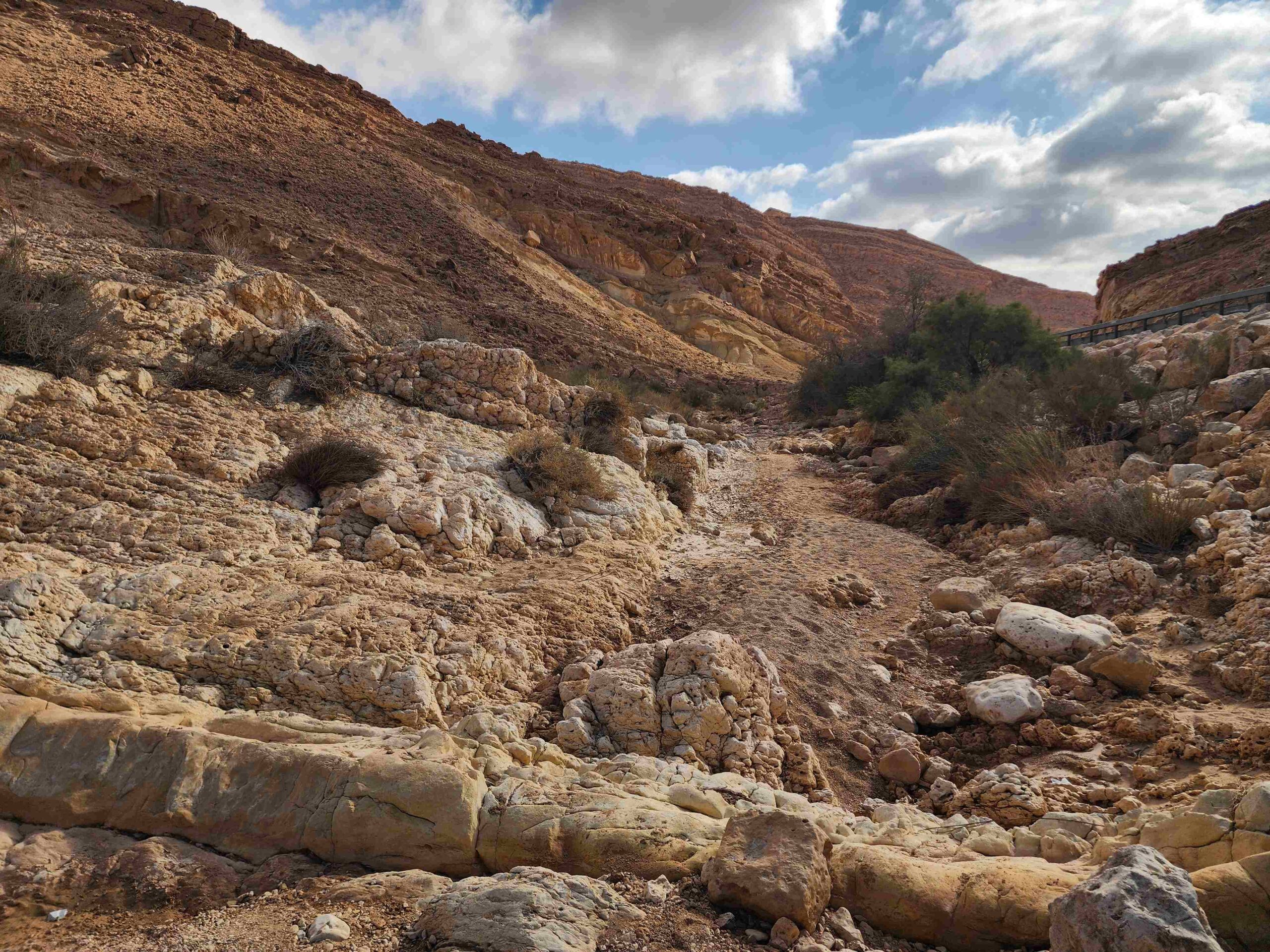
At the bottom of the descent, the black trail guides you gently through the dry riverbed of Nahal Hatira (Hatira Stream), bringing you directly back to the Colored Sands site where you started.
Beyond the Trail: Colored Sands & Quartzite Pillars
Your adventure does not end when the hike is over. The area surrounding the trailhead is rich with geological surprises.
The Colored Sands Site
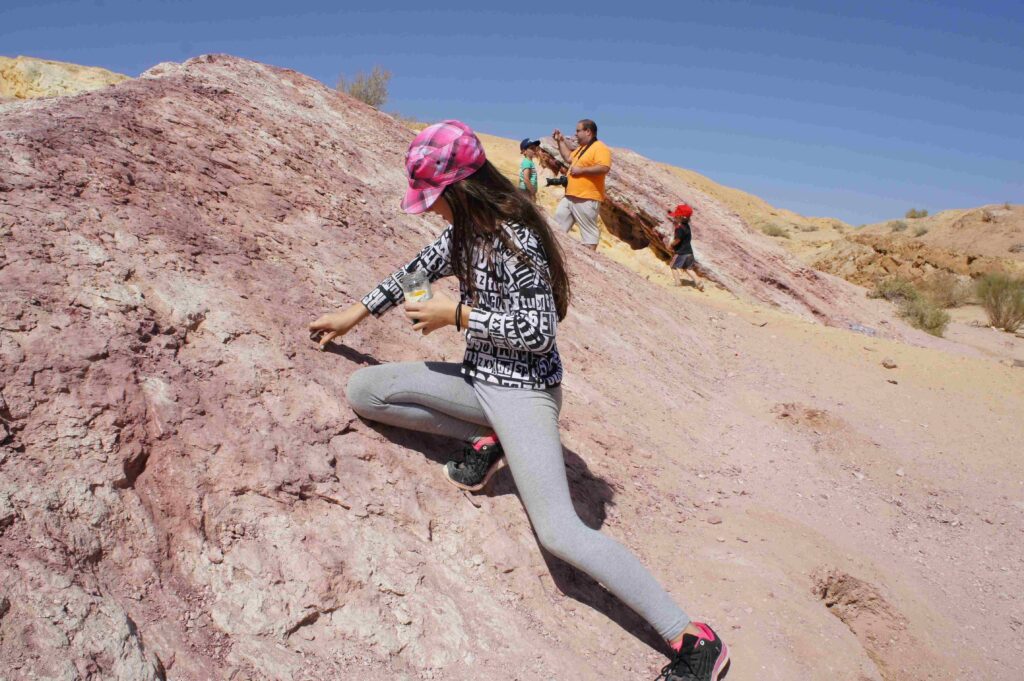
The starting and ending point of your hike was once an active sandstone quarry. Today, it has been beautifully restored into a nature site equipped with picnic tables.
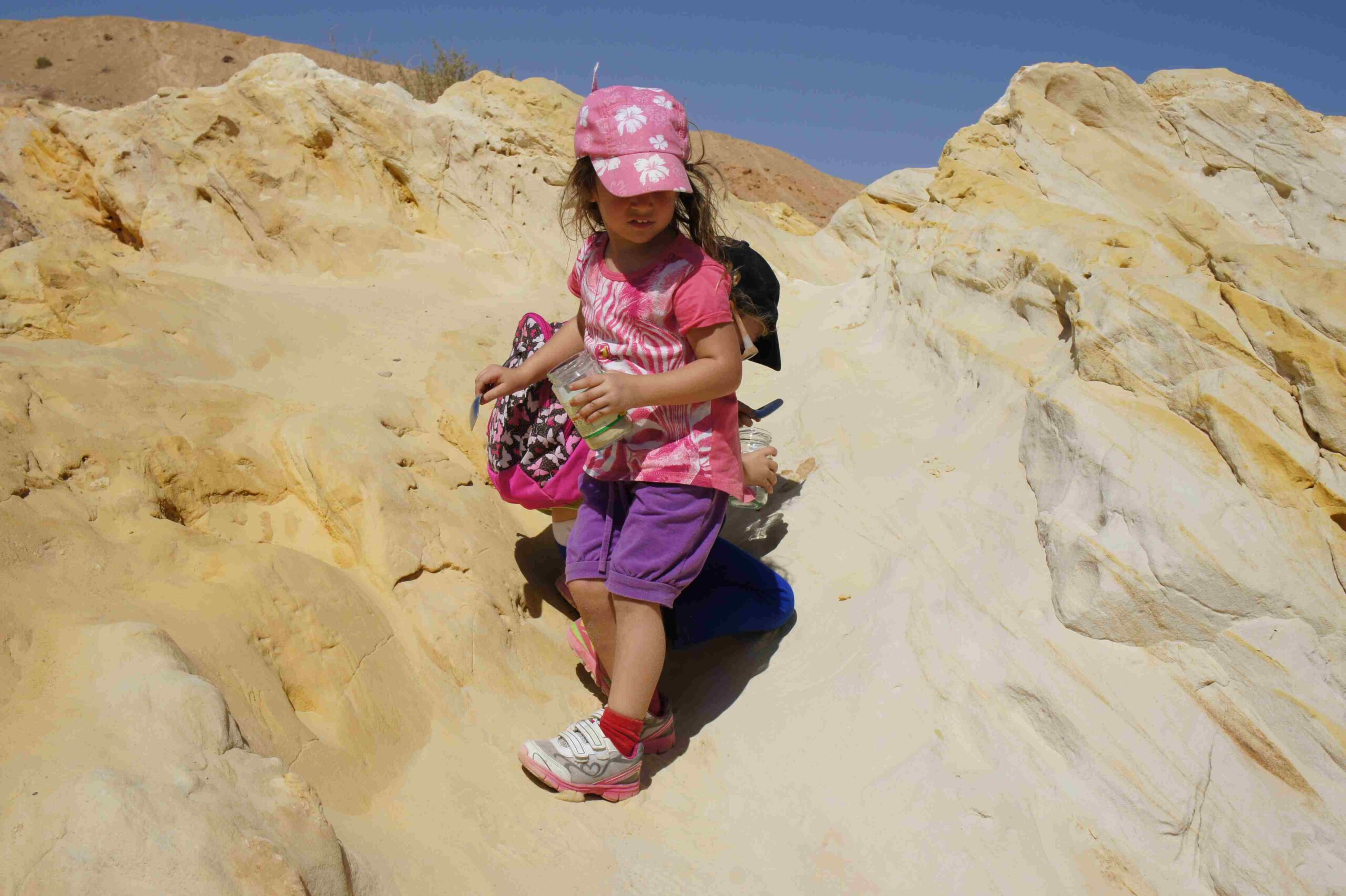
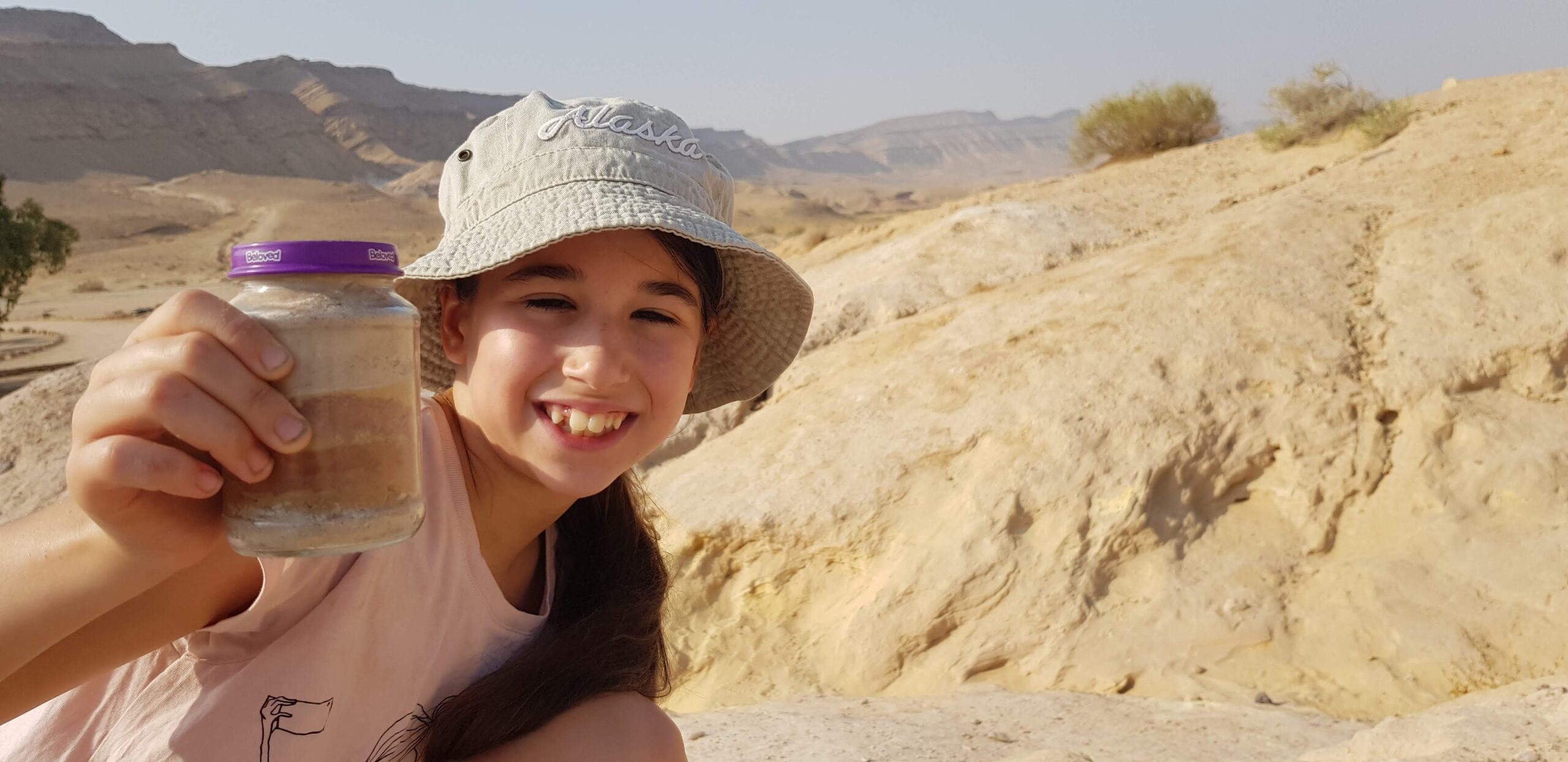
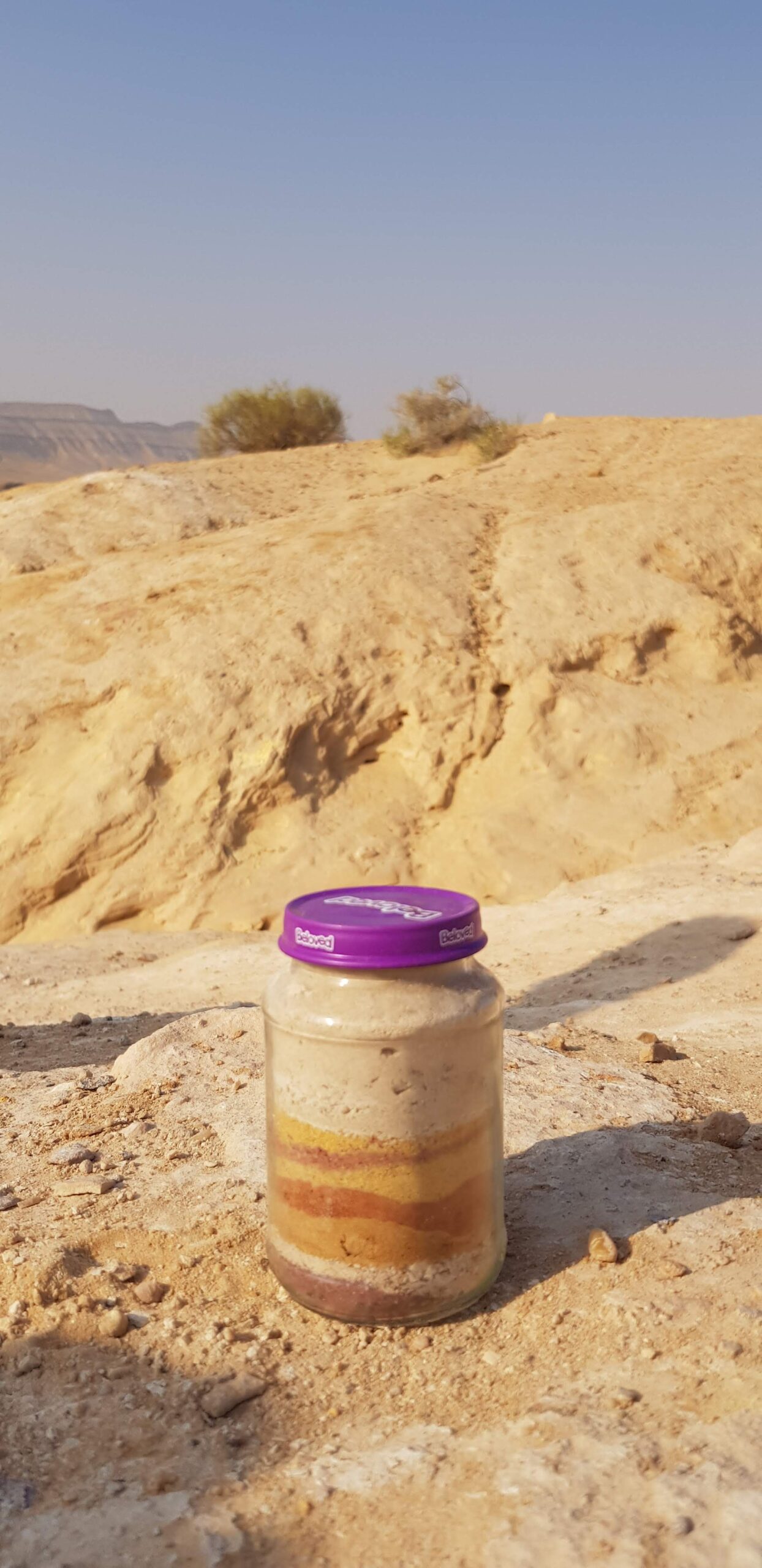
A Tip for Families: Be sure to pack a few empty, clean glass bottles from home! The sandstone here is incredibly soft and crumbles into vibrant shades of natural pink, orange, yellow, and white sand. Your children can gather different colors in layers to create their own beautiful, natural desert souvenirs. Note: Please bring your own bottles, as there are no shops or vendors selling them at the site.
The Quartzite Pillars
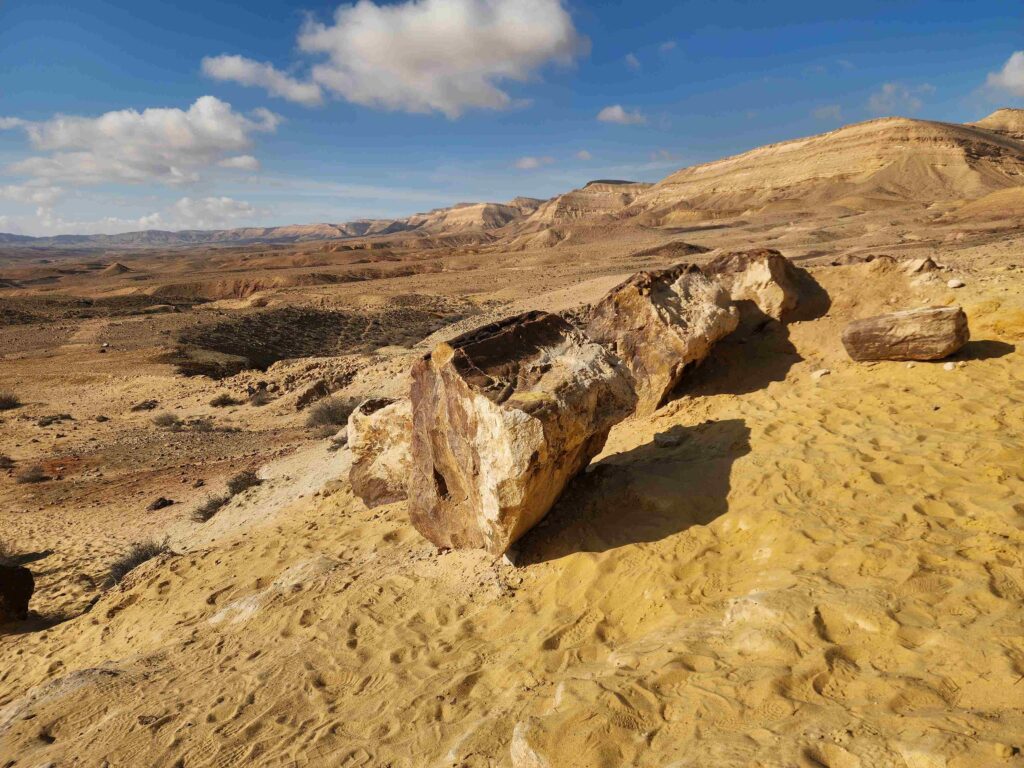
If you have some energy left, take a short drive to see the Quartzite Pillars (popularly known as the “Fossilized Trees”).
How to get there: Drive on the main road back toward the town of Yeruham until you see a sign on your left for “Quartzite Pillars” (Amudei Quartzit). Park and take a short, 300-400 meter walk.
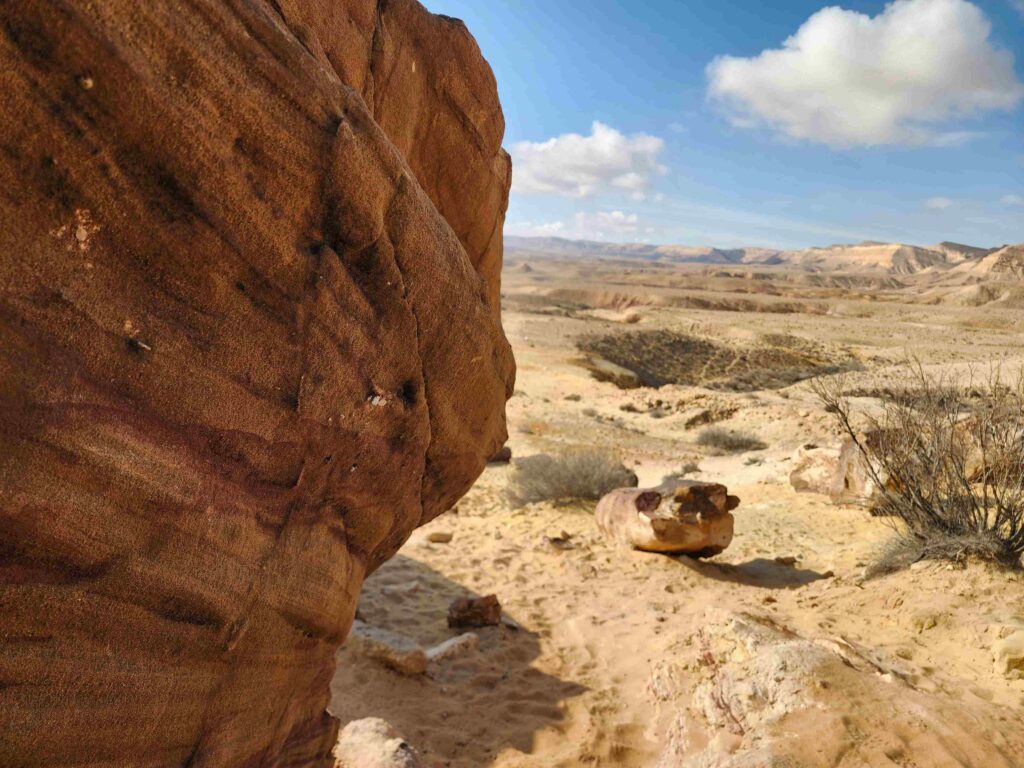
Here, you will find massive, horizontal stone cylinders lying flat on the sandstone slope, resembling giant fallen tree trunks. For years, researchers debated whether these were fossilized ancient trees from a wetter climatic era. Today, we know they are actually quartzite formations created millions of years ago by intense geothermal heat, pressure, and iron-rich fluids that fused the sandstone into these cylindrical shapes. On a guided tour, we peel back the layers of this geological mystery to understand the volcanic activity that shaped the ancient Negev.
Extend Your Trip: Mamshit National Park
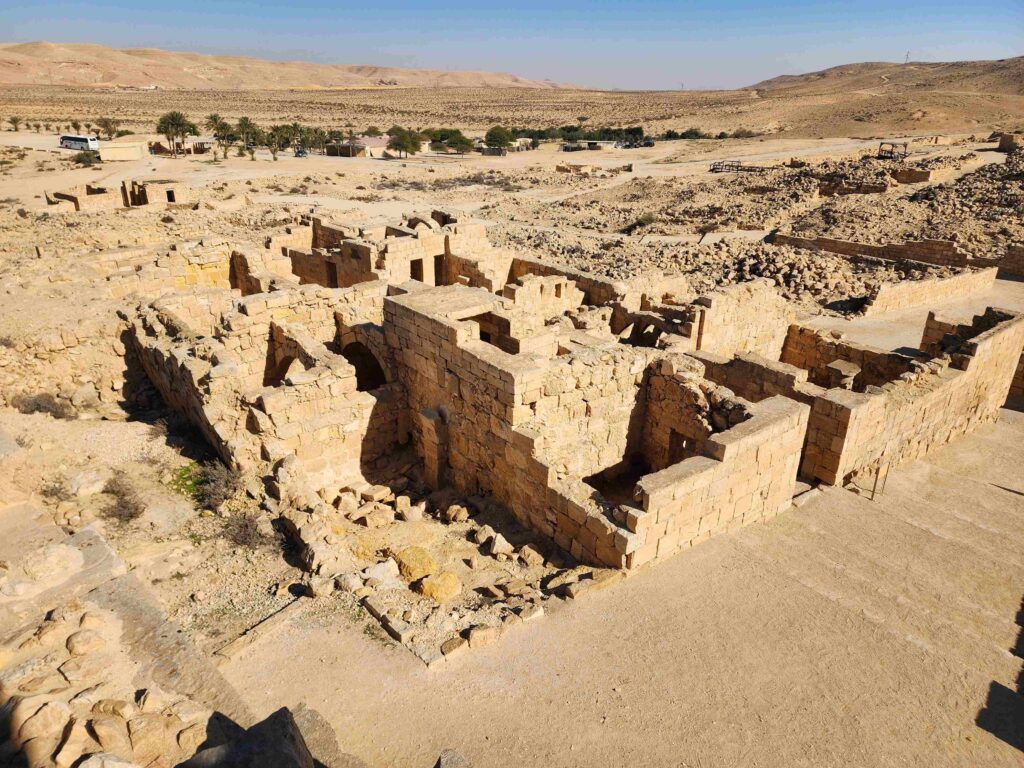
To turn your day trip into a full desert odyssey, head northeast to Mamshit National Park, a UNESCO World Heritage site located along the ancient Nabatean Incense Route.
Who Were the Nabateans?
The Nabateans were legendary desert nomads who controlled the trade of highly valuable frankincense and myrrh from southern Arabia to the Mediterranean ports. Mamshit was one of their key caravan stations.
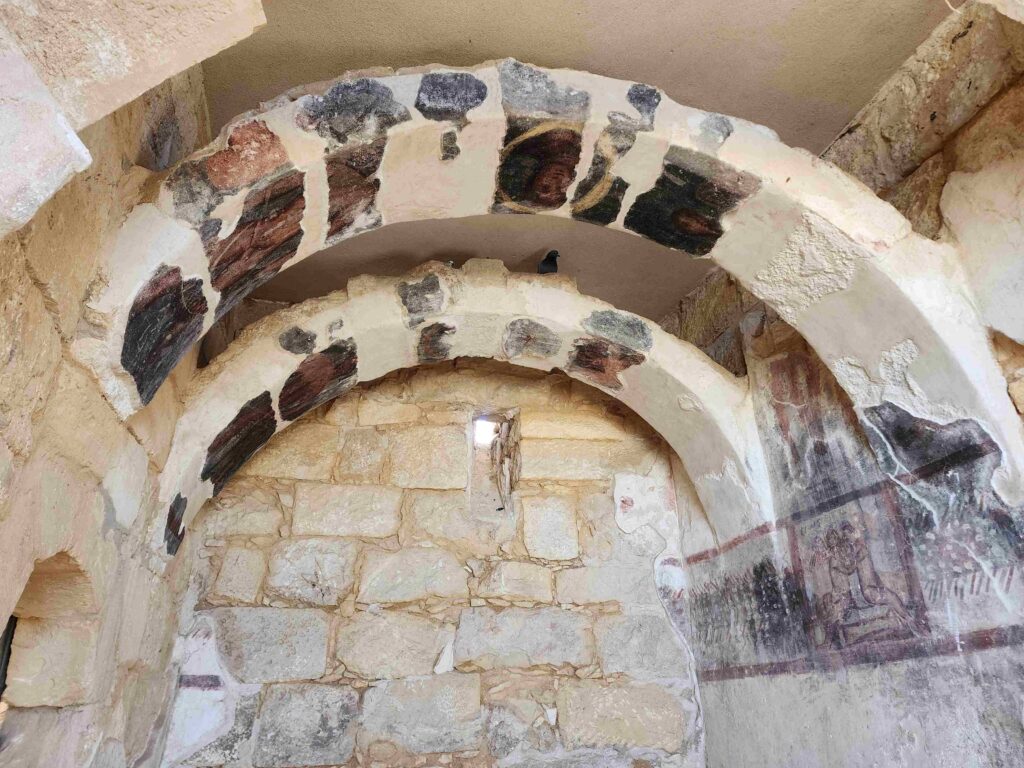
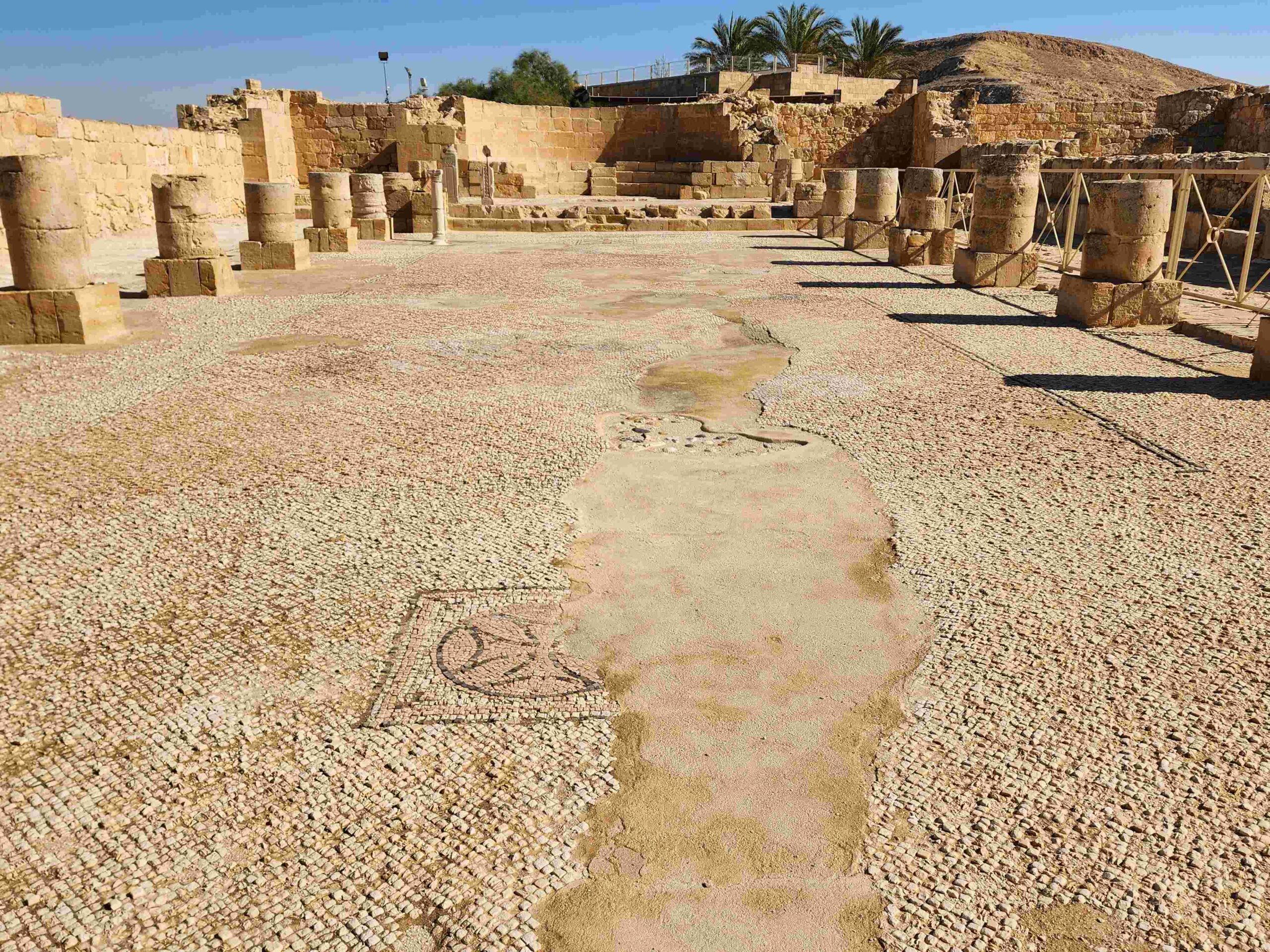
Over time, as the Roman Empire embraced Christianity, the Nabateans transitioned from wandering merchants to settled, highly advanced farmers and engineers. At Mamshit, you can explore:
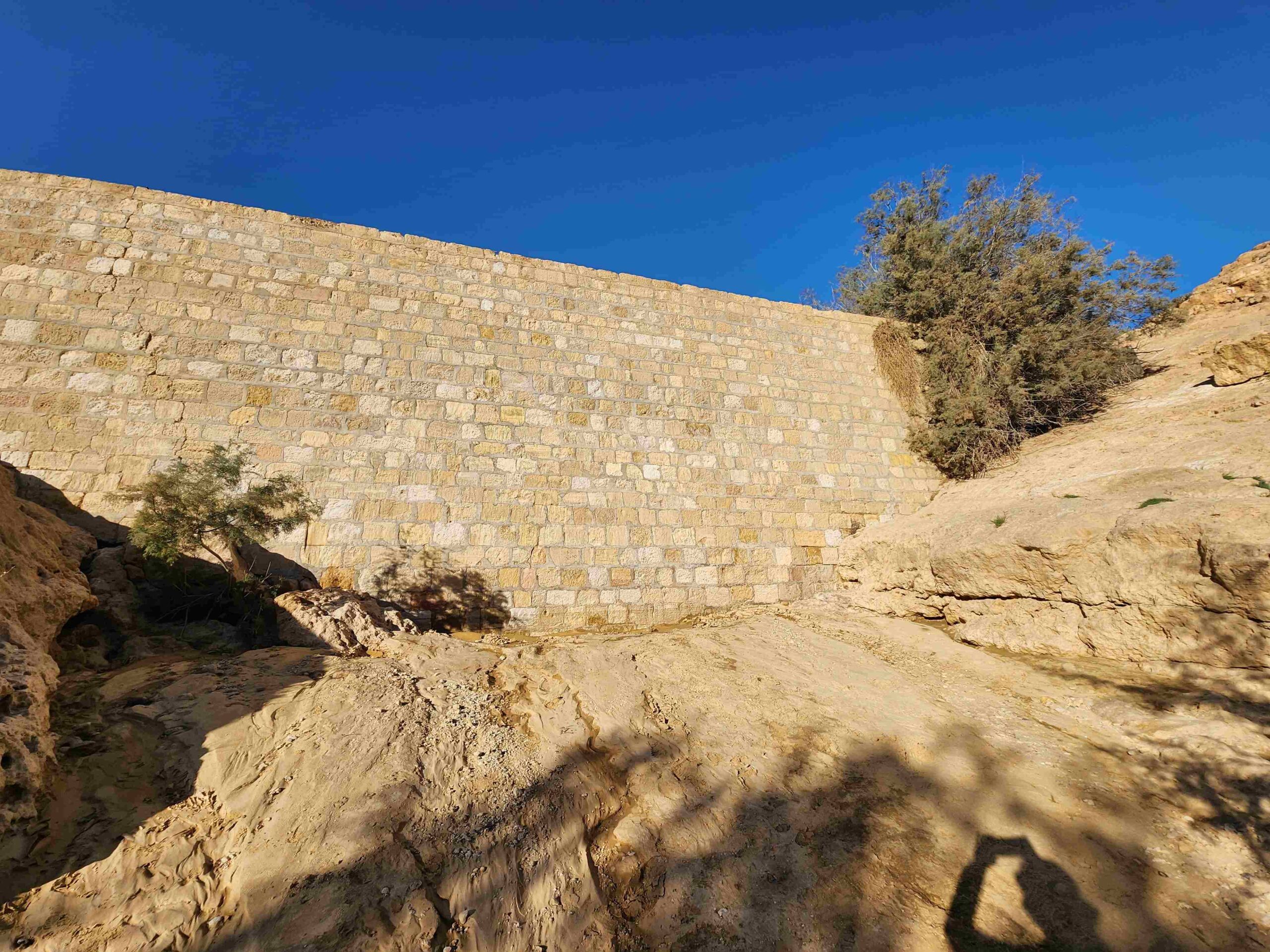
- Water Engineering: Marvel at the dams, cisterns, and bathhouses that allowed a community to thrive in an arid wilderness.
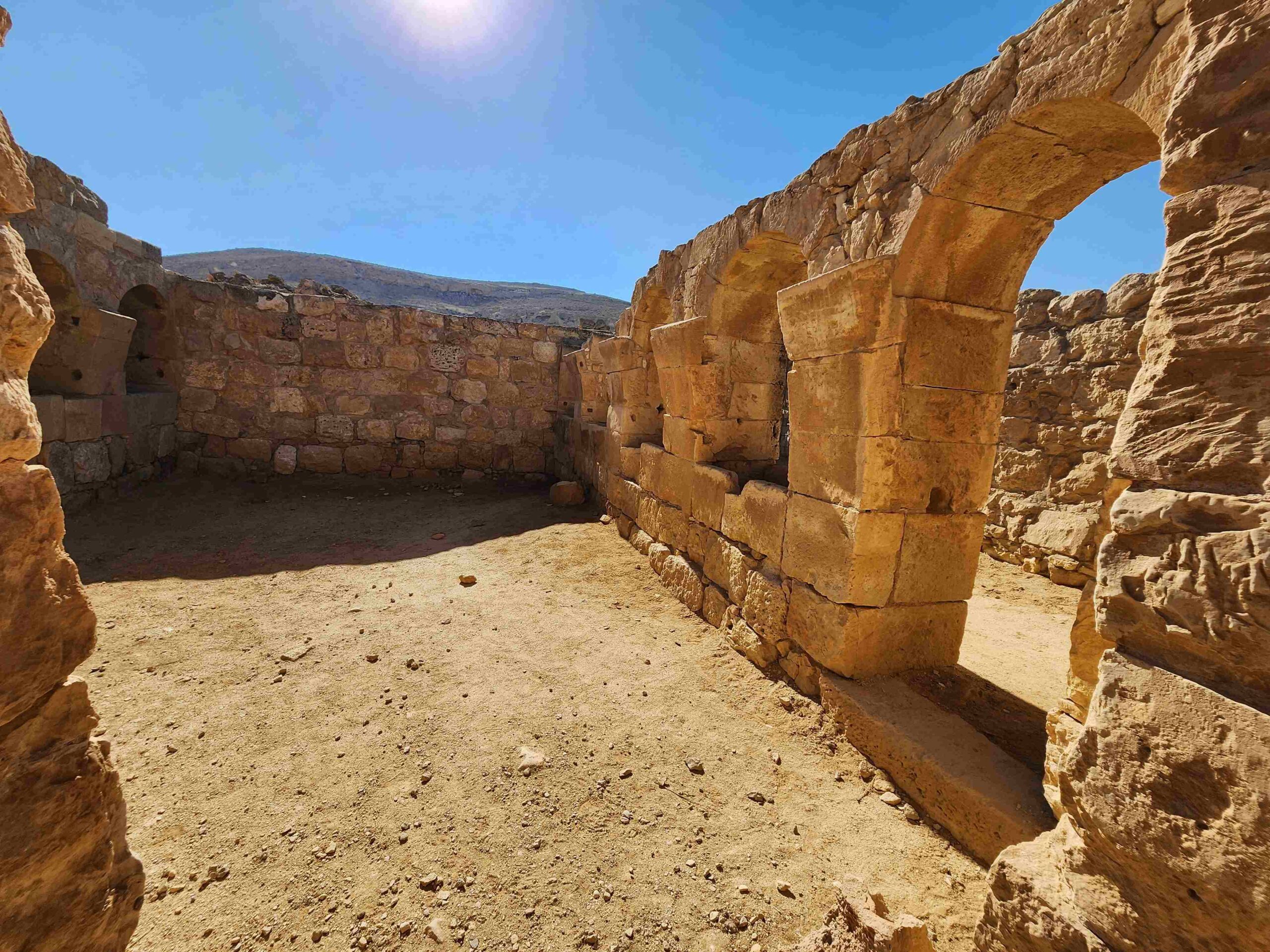
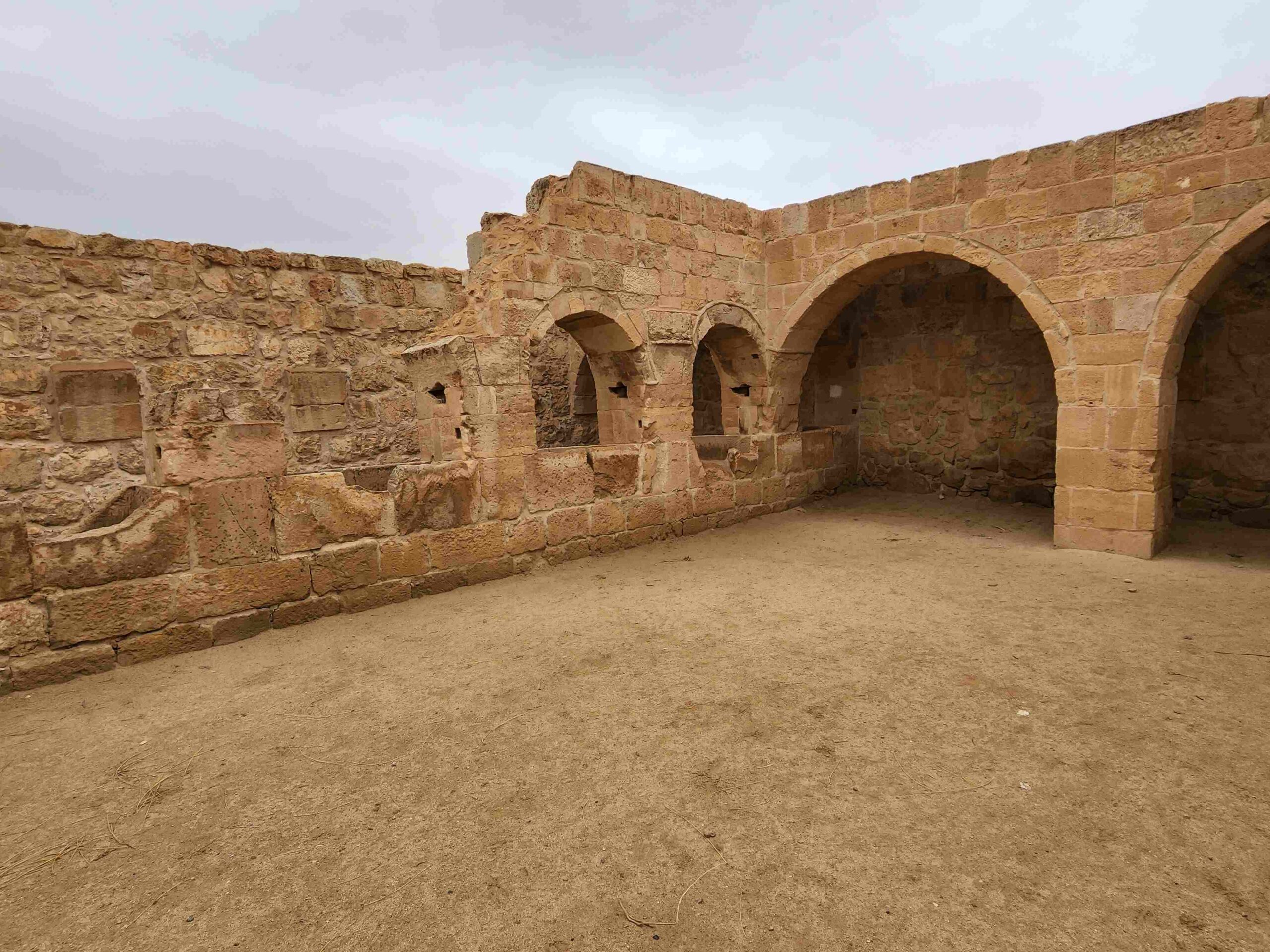
- Ancient Architecture: Walk through preserved stone arched streets, courtyards, and stables once famous for breeding elite Arabian horses.
- The Madaba Map Connection: Mamshit’s historical significance is confirmed by its appearance on the famous 6th-century CE Madaba mosaic map discovered in Jordan.
Add a Hike: The Nahal Mamshit Loop
If you want to experience the wilderness surrounding the ruins, you can hike the Nahal Mamshit loop. This trail takes you out of the ancient city walls, down into the deep limestone gorge of the Mamshit stream, past the massive Nabatean dams, and back to the park entrance. It is a wonderful way to experience the quiet beauty of the desert that protected these ancient traders for centuries.
Trip Overview
Duration:
Full Day (Approx. 8-10 hours, depending on your starting point)
Pace:
Flexible and tailored to your interests
Activity Level:
Moderate to High
Highlights:
Ancient Archaeology, Geological formations, advetures hiking, and panoramic vistas
Frequently Asked Questions (FAQ)
What is the best season to hike the Small Fin?
The ideal hiking season is from October to May (autumn, winter, and spring). During these months, the desert temperatures are pleasant.
Important Safety Warning: The entire trail is completely exposed to the sun. Do not attempt this hike during the hot summer months, on days with extreme heat warnings, or when there is any forecast of flash floods in the southern basins, as Nahal Hatira can flood rapidly.
Is there an entry fee or registration required?
Yeruham Crater / Small Fin / Colored Sands: Completely free and open to the public. No pre-registration is required.
Mamshit National Park: Managed by the Israel Nature and Parks Authority. Entry requires an admission fee (free for Matmon national parks pass holders).
What are the visiting hours for Mamshit National Park?
Because Mamshit is a national park managed by the official Israel Nature and Parks Authority (INPA), its opening hours change seasonally (between summer and winter) and vary on Fridays, Saturdays, and Jewish holiday eves.
To avoid any disappointments, we highly recommend checking the official Israel Nature and Parks Authority website for the most up-to-date visiting hours before heading out.
- A Quick Guide Tip: As a general rule for Israeli national parks, operating hours are shorter in the winter (October to March) than in the summer (April to September). Also, keep in mind that the last entry to the park is strictly one hour before the scheduled closing time.
Is it allowed to collect sand anywhere in the crater?
No. The Yeruham Crater is a protected nature reserve. Gathering sand or stones is strictly prohibited everywhere except within the designated boundaries of the Colored Sands quarry site. Please respect the desert and leave it as you found it.
Can the hike be made more challenging?
If you are a highly experienced hiker looking for a genuine, heart-pumping physical challenge, skip the Small Fin and tackle The Big Fin (HaSnapir HaGadol) instead.
The Challenge: While the Small Fin is family-friendly, the Big Fin is a steep, strenuous, and highly technical climb up the dramatic limestone strata (“fins”) that form the crater’s outer wall.
The Route: This $2\text{ to }2.5\text{-kilometer}$ ($1.2\text{ to }1.5\text{-mile}$) point-to-point trail typically starts outside the crater at the Ein Yorkeam Car Park. Following the Israel National Trail (marked orange/blue/white) and black trail markers, you will scramble up a nearly vertical rock slope to the ridge summit. From there, you are rewarded with an absolute world-class view of the entire Yeruham Crater and the Hatira ridge before descending steeply into the crater to finish at the Colored Sands Car Park.
Customizing Your Experience
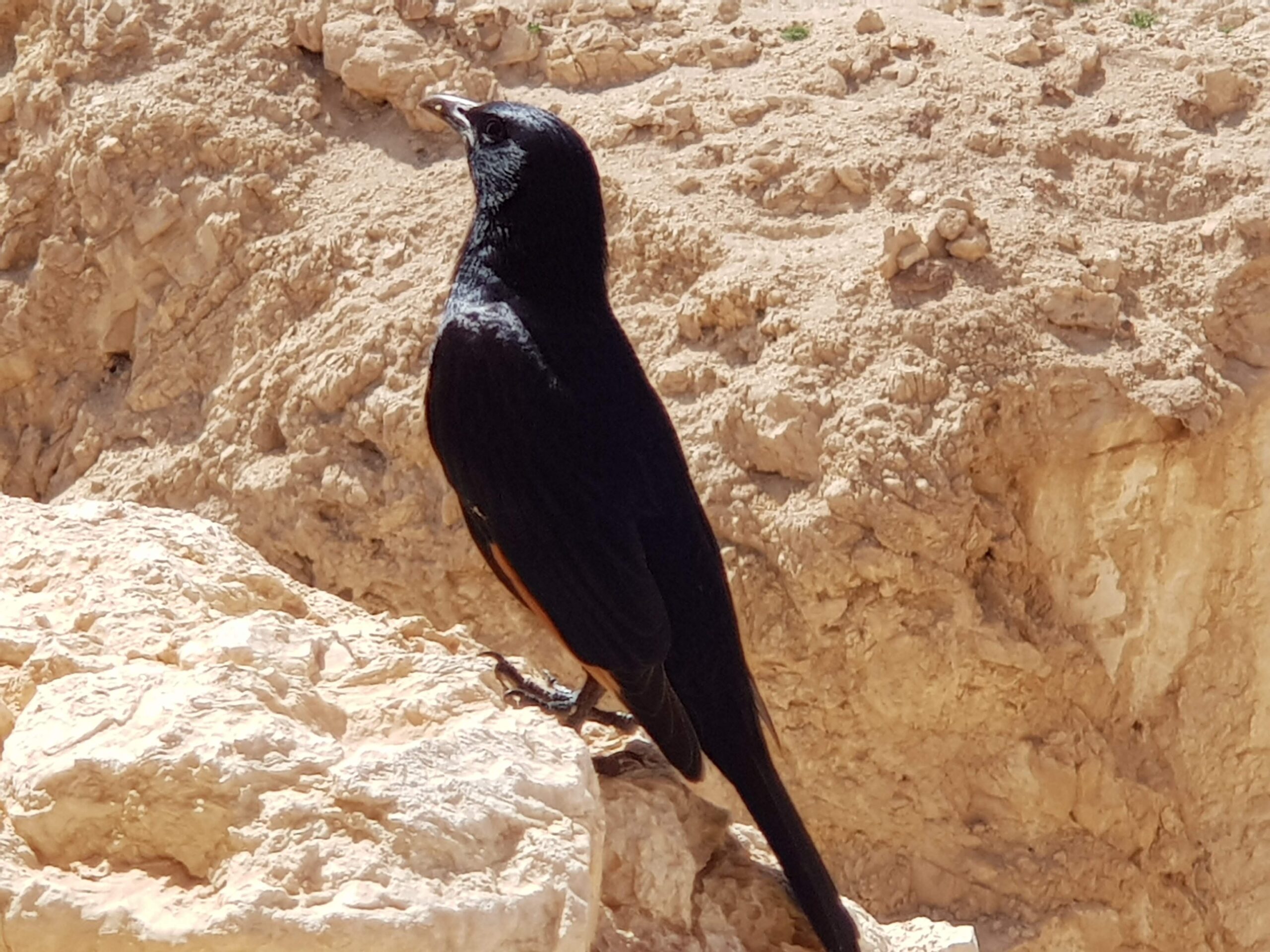
The desert offers endless possibilities. This itinerary serves as a starting point and can be adjusted based on your physical preference, specific interests (such as botany, birdwatching, or archaeology), or the time of year. Ready to plan your desert day? I invite you to reach out so we can discuss your preferences and create a tailor-made experience that fits your pace and style.
It's time to go on a trip
Leave your details and we will contact you